

www.foodpackautomation.com
30
'26
Written on
Modified on
BASF News
Modular Barrier Materials for Flexible Packaging
BASF introduces compostable material system for adaptable barrier packaging across food, personal care, and healthcare applications.
www.basf.com
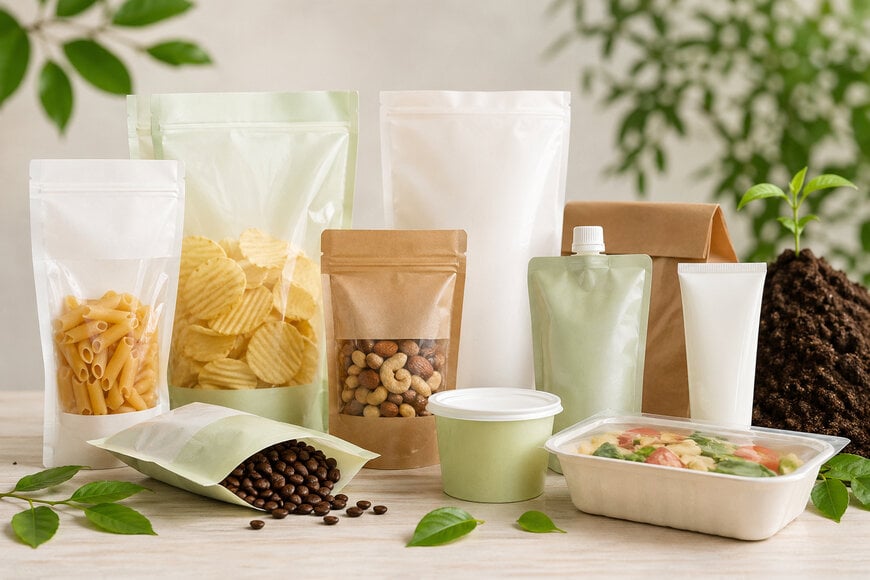
Flexible packaging manufacturers are seeking materials that combine barrier performance with compatibility across recycling streams. BASF has expanded its ecovio biopolymer portfolio to address this need with modular, certified compostable materials designed for both paper- and plastic-based packaging structures.
Expanded Material Options for Barrier Design
The updated portfolio introduces a range of compostable material grades that can be configured into mono- or multi-layer structures. These materials provide adjustable barrier properties against grease, oils, liquids, oxygen, and moisture key parameters for preserving product integrity in fast-moving consumer goods (FMCG) sectors such as food, beverages, personal care, healthcare, and pet food.
The system supports multiple processing methods, including extrusion coating, film and sheet extrusion, and lamination using extrusion, adhesives, or heat. Compatibility with existing manufacturing equipment reduces the need for capital investment, enabling integration into established production lines.
A notable technical development is the ability to produce ultra-thin biaxially stretched films. These films combine reduced material usage with mechanical strength and high optical clarity, including transparency suitable for retail packaging.
Integration with Recycling Pathways
A central aspect of the material system is its alignment with different end-of-life scenarios, supporting a more flexible digital supply chain approach to packaging design. Depending on substrate selection and structure:
- Paper-based laminates can be processed through standard paper recycling streams, maintaining high fiber recovery rates.
- Contaminated paper packaging can be diverted to organic recycling where appropriate.
- Plastic-based flexible packaging made from the material can be composted under industrial or home conditions without generating persistent microplastics.
The material is available with bio-based content up to 80% or as biomass-balanced variants, offering options for reducing fossil resource input while maintaining performance consistency.
Application Scope and Functional Performance
The material system is designed for a wide range of packaging formats, including pouches, sachets, trays, and boxes. These can accommodate diverse product conditions such as hot or cold contents, dry or liquid formulations, and fatty or oxygen-sensitive goods.
Typical applications include coffee, snack foods, cereals, confectionery, frozen products, sauces, meat, dairy, as well as non-food items like shampoos and lotions. The barrier performance enables shelf-life stability comparable to conventional multilayer packaging, while offering alternative disposal pathways.
Industry Context and Trade Fair Presentation
The expanded portfolio was presented at Interpack 2026, held from May 7–13 in Düsseldorf, Germany. The event highlighted material innovations addressing regulatory pressure and sustainability targets in global packaging markets.
Positioning Within Packaging Technology Trends
The development reflects a broader shift toward material systems that integrate performance, processability, and end-of-life considerations early in product design. Unlike conventional multilayer plastics, which often face recycling challenges due to material complexity, modular compostable systems aim to balance barrier functionality with waste management compatibility.
While high-barrier flexible packaging typically relies on aluminum layers or complex polymer blends, these new materials provide an alternative approach by enabling tunable barrier properties within compostable or recyclable structures. Their effectiveness depends on correct material selection, layer configuration, and alignment with local waste infrastructure.
Conclusion
The expanded material portfolio introduces a configurable approach to barrier packaging, enabling manufacturers to tailor performance and disposal pathways within a single system. By combining processing flexibility with multiple recycling options, it supports the transition toward more adaptable and resource-efficient packaging solutions across FMCG sectors.
Edited by an industrial journalist Sucithra Mani with AI assistance.
www.basf.com
Application Scope and Functional Performance
The material system is designed for a wide range of packaging formats, including pouches, sachets, trays, and boxes. These can accommodate diverse product conditions such as hot or cold contents, dry or liquid formulations, and fatty or oxygen-sensitive goods.
Typical applications include coffee, snack foods, cereals, confectionery, frozen products, sauces, meat, dairy, as well as non-food items like shampoos and lotions. The barrier performance enables shelf-life stability comparable to conventional multilayer packaging, while offering alternative disposal pathways.
Industry Context and Trade Fair Presentation
The expanded portfolio was presented at Interpack 2026, held from May 7–13 in Düsseldorf, Germany. The event highlighted material innovations addressing regulatory pressure and sustainability targets in global packaging markets.
Positioning Within Packaging Technology Trends
The development reflects a broader shift toward material systems that integrate performance, processability, and end-of-life considerations early in product design. Unlike conventional multilayer plastics, which often face recycling challenges due to material complexity, modular compostable systems aim to balance barrier functionality with waste management compatibility.
While high-barrier flexible packaging typically relies on aluminum layers or complex polymer blends, these new materials provide an alternative approach by enabling tunable barrier properties within compostable or recyclable structures. Their effectiveness depends on correct material selection, layer configuration, and alignment with local waste infrastructure.
Conclusion
The expanded material portfolio introduces a configurable approach to barrier packaging, enabling manufacturers to tailor performance and disposal pathways within a single system. By combining processing flexibility with multiple recycling options, it supports the transition toward more adaptable and resource-efficient packaging solutions across FMCG sectors.
Edited by an industrial journalist Sucithra Mani with AI assistance.
www.basf.com
