

www.foodpackautomation.com
30
'26
Written on
Modified on
JBT Marel News
Integrated Seafood Processing Systems Debut
JBT Marel presents unified processing technologies at Seafood Processing Global 2026 in Barcelona, demonstrating equipment and digital supply chain capabilities across fish processing operations.
marel.com
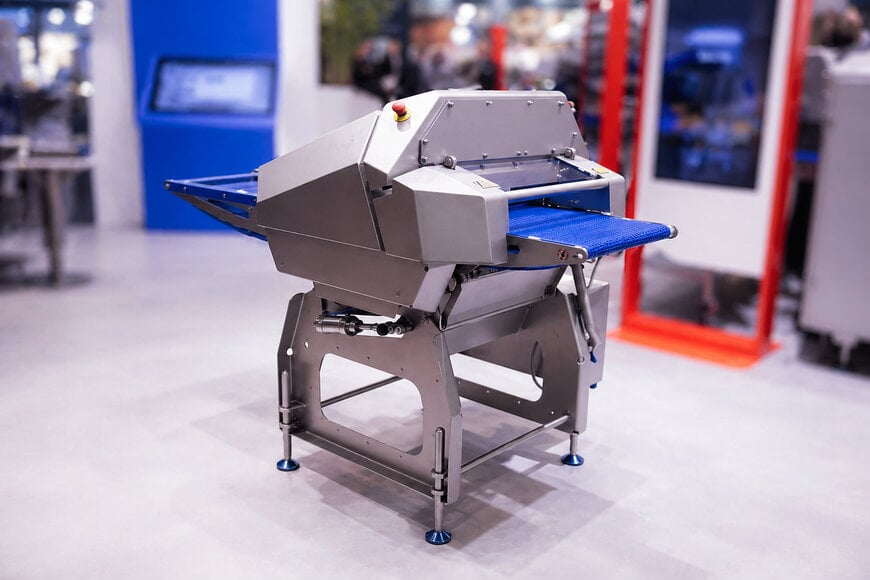
The introduction of multiple fish processing machines and integrated system capabilities by JBT Marel highlights a shift toward end-to-end automation in seafood processing, combining mechanical equipment with software-driven production environments.
Technology Integration at Industry Scale
At Seafood Processing Global 2026 (21 April to 23 April), held in Barcelona, the company presented its first consolidated portfolio following the merger of JBT and Marel. The exhibition served as a platform to demonstrate how integrated systems can streamline operations from primary processing to packaging within a unified digital supply chain.
The combined portfolio spans gutting, filleting, slicing, freezing, and packaging, supported by software and service layers designed to improve traceability, throughput consistency, and yield optimization. This approach reflects broader industry movement toward connected processing environments, where equipment performance and production data are aligned within an automotive data ecosystem like framework adapted for food processing.
New Processing Equipment and Technical Capabilities
Several newly introduced machines addressed specific bottlenecks in fish processing workflows. A whitefish skinner was deployed with immediate commercial uptake, indicating demand for improved skinning precision and reduced manual handling. The system is designed to maintain fillet integrity while increasing throughput, a key requirement in high-volume whitefish operations.
The EVi gutting system, scheduled for market release later in 2026, represents an automated approach to viscera removal. Such systems typically rely on sensor-guided alignment and controlled cutting mechanisms to ensure repeatability and minimize waste, particularly important in species with variable anatomical characteristics.
A salmon slicing system was also introduced, targeting portioning accuracy and yield consistency. In industrial fish processing, slicing precision directly affects product standardization and downstream packaging efficiency, making automation critical for meeting retail and export specifications.
In addition, combined filleting and deheading systems (MS2750 and MS3028) were demonstrated under continuous operation conditions. These systems are engineered to synchronize multiple processing steps, reducing handling time and improving line efficiency.
Continuous demonstrations indicated stable throughput performance under repeated cycles, a key indicator of industrial readiness.
End-to-End Processing and System Architecture
Beyond individual machines, the exhibition emphasized full-line integration. Equipment such as brine injectors from Schröder, freezing technologies from Frigoscandia, and packaging systems from Proseal were presented as interconnected modules within a single processing architecture.
The inclusion of software platforms and service infrastructure highlights a transition toward data-enabled operations. These systems typically support production monitoring, predictive maintenance, and process optimization, enabling processors to reduce downtime and maintain consistent product quality across batches.
Industry Relevance and Operational Impact
The consolidation of JBT and Marel technologies enables a broader system-level offering, aligning with industry demand for fewer integration points and more standardized processing lines. For seafood processors, this reduces complexity in commissioning and maintaining equipment while enabling scalability across facilities.
Applications span whitefish and salmon processing, where automation addresses labor constraints, hygiene requirements, and yield optimization. Integrated systems also support compliance with traceability standards increasingly required in global seafood trade.
The commercial response at the Barcelona event, including signed equipment agreements and trial commitments, indicates active industry investment in automated and connected processing technologies.
Position Within the Processing Technology Landscape
Within the seafood processing sector, integrated solutions combining primary processing, secondary processing, and packaging remain a benchmark for large-scale operations. Comparable approaches exist among major equipment suppliers; however, differentiation typically depends on the level of software integration, interoperability, and service support.
By aligning mechanical processing systems with software-driven control and monitoring, JBT Marel positions itself within a segment focused on fully connected production environments rather than standalone machinery.
Conclusion
The technologies presented demonstrate a move toward unified, data-enabled seafood processing systems. By combining equipment across multiple processing stages with integrated software and services, JBT Marel advances the implementation of digital supply chain principles in seafood production, supporting efficiency, traceability, and scalable operations.
Edited by an industrial journalist Sucithra Mani with AI assistance.
www.jbtmarel.com
