
www.foodpackautomation.com
04
'26
Written on Modified on
Global Drain Technologies Advances Hygienic Drainage Design
Stainless steel drainage systems and facility-wide design strategies address persistent contamination risks in ready-to-eat food processing environments.
globaldraintech.com
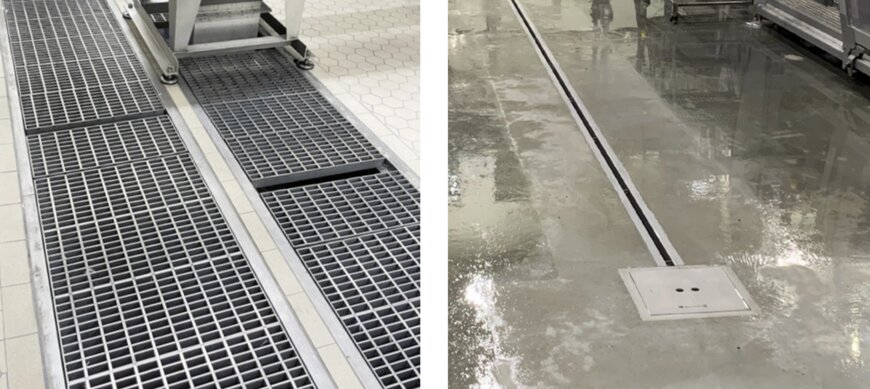
Listeria monocytogenes remains a persistent contamination risk in ready-to-eat (RTE) food production, particularly in environments where moisture and organic residues accumulate. In this context, drainage systems are increasingly treated as critical control points, with Scott Steindler, Senior Director of Drainage Solutions at Global Drain Technologies, outlining hygienic drainage design using stainless steel materials to reduce contamination pathways.
Drainage systems as contamination reservoirs
Drainage infrastructure in food processing plants creates conditions favorable for microbial survival: moisture, nutrients, and limited light exposure. These environments support biofilm formation, allowing Listeria monocytogenes to persist over extended periods and re-enter production zones through mechanisms such as aerosolization, backflow, or biofilm detachment under changing flow conditions.
Because drains collect contaminated water and residues, they frequently test positive in environmental monitoring programs. This positions them as both detection points and potential sources of recontamination, particularly when system design limits effective cleaning.
Material selection and hygienic engineering principles
Listeria monocytogenes tolerates refrigeration, high salt concentrations, and varying pH levels, making material compatibility and cleanability essential. Hygienic drainage systems commonly use T304 or T316 stainless steel due to their non-porous surface and resistance to corrosion, chemicals, and thermal stress.
When combined with smooth interior geometries, hygienic welds, and no-niche designs, stainless steel systems reduce microbial adhesion and support validated sanitation procedures using hot water, caustics, and acidic agents. Standards such as EHEDG guidelines and NSF/ANSI/3-A 14159-1 define these hygienic design requirements.
In contrast, porous materials like polymer concrete or rough piping surfaces can degrade over time, forming cracks or absorbing contaminants. These conditions create persistent microbial niches that are difficult to sanitize.
Facility-scale drainage design considerations
Effective Listeria control requires a system-level approach rather than isolated component upgrades. Drainage systems must be designed to handle peak washdown flows, maintain proper slope to prevent standing water, and eliminate dead legs where fluid stagnation can occur.
Drain types are selected based on application:
- Area drains are used in smaller zones (typically under 400 sq ft) for localized water collection.
- Slot drains provide a narrow, grate-free design suited for high-traffic washdown areas, reducing debris accumulation.
- Trench drains are deployed in large production environments to manage high volumes of liquid and solid waste.
Additional components such as stainless steel P-traps prevent gas and pathogen backflow while maintaining durability under thermal and chemical exposure. Catch basins with strainer baskets help separate solids, reducing blockage and overflow risks.
Proper integration between drains, piping, and floor systems is critical. Sealed transitions and structurally stable interfaces reduce the likelihood of subsurface leakage, which can create hidden contamination zones beneath flooring.
Layout and flow management in production environments
Drain placement plays a role in contamination control beyond fluid removal. Systems should be positioned to collect runoff efficiently while maintaining separation from personnel and automated equipment paths. This reduces the risk of cross-contamination from drain areas to food-contact surfaces.
Floor slopes and equipment layout must be coordinated during design to avoid post-installation modifications that can introduce uneven surfaces or microbial harborage points. A whole-facility drainage strategy aligns production flow, sanitation access, and contamination control.
Operational practices supporting hygienic design
Engineering controls are most effective when combined with structured sanitation protocols. Standard operating procedures (SOPs) should include routine drain cleaning as part of washdown cycles, with validation through visual inspection and environmental swabbing.
Operational measures include:
Proper integration between drains, piping, and floor systems is critical. Sealed transitions and structurally stable interfaces reduce the likelihood of subsurface leakage, which can create hidden contamination zones beneath flooring.
Layout and flow management in production environments
Drain placement plays a role in contamination control beyond fluid removal. Systems should be positioned to collect runoff efficiently while maintaining separation from personnel and automated equipment paths. This reduces the risk of cross-contamination from drain areas to food-contact surfaces.
Floor slopes and equipment layout must be coordinated during design to avoid post-installation modifications that can introduce uneven surfaces or microbial harborage points. A whole-facility drainage strategy aligns production flow, sanitation access, and contamination control.
Operational practices supporting hygienic design
Engineering controls are most effective when combined with structured sanitation protocols. Standard operating procedures (SOPs) should include routine drain cleaning as part of washdown cycles, with validation through visual inspection and environmental swabbing.
Operational measures include:
- Using dedicated, color-coded tools for drain cleaning to prevent cross-contamination.
- Re-sanitizing hands and gloves after handling drainage components.
- Implementing drain-first cleaning sequences during washdown.
- Minimizing aerosol generation through controlled cleaning methods.
Environmental monitoring programs should incorporate drains, floor-drain interfaces, and adjacent transport vectors such as footwear or equipment wheels. Persistent contamination points can be integrated into HACCP plans for ongoing risk management.
Engineering role in contamination control
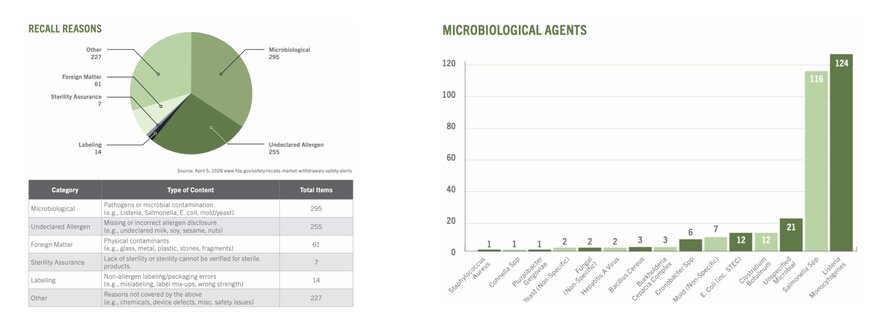
Industry data, including recall trends linked to microbial contamination, indicate that drainage systems remain a critical but often under-optimized component in hygienic facility design. Upgrading drainage infrastructure using established hygienic engineering principles provides measurable improvements in cleanability, maintenance efficiency, and contamination control.
As food production systems scale and supply chains become more centralized, whole-facility drainage design supports both operational resilience and compliance with food safety standards.
Edited by Aishwarya Mambet, Induportals Editor, with AI assistance.
www.globaldraintech.com
Engineering role in contamination control
Industry data, including recall trends linked to microbial contamination, indicate that drainage systems remain a critical but often under-optimized component in hygienic facility design. Upgrading drainage infrastructure using established hygienic engineering principles provides measurable improvements in cleanability, maintenance efficiency, and contamination control.
As food production systems scale and supply chains become more centralized, whole-facility drainage design supports both operational resilience and compliance with food safety standards.
Edited by Aishwarya Mambet, Induportals Editor, with AI assistance.
www.globaldraintech.com
