
www.foodpackautomation.com
05
'26
Written on Modified on
Modular Lateral Guidance and Support Elements for Conveyor Systems
Technical overview of KIPP’s modular conveyor support and lateral guidance elements by KIPP Scandinavia AB, contextualizing design, applications, and industrial relevance.
www.kippwerk.de

A new modular range of lateral guidance and support elements from KIPP Scandinavia AB provides configurable mechanical components intended to improve stability and product handling in conveyor systems across industrial sectors such as food processing, packaging, automation and special machine construction. The design addresses structural alignment, load capacity and integration with existing conveyor lines.
Background and Relevance
Conveyor systems are ubiquitous in manufacturing and logistics, where precision movement and alignment of goods directly affect throughput and quality. Components that provide lateral guidance and structural support prevent misalignment, reduce slippage, and maintain conveyor belt integrity under load. The “digital supply chain” increasingly expects mechanical reliability that complements sensor and automation systems in production environments; KIPP’s modular elements are positioned to meet these operational demands.
Modular System Architecture
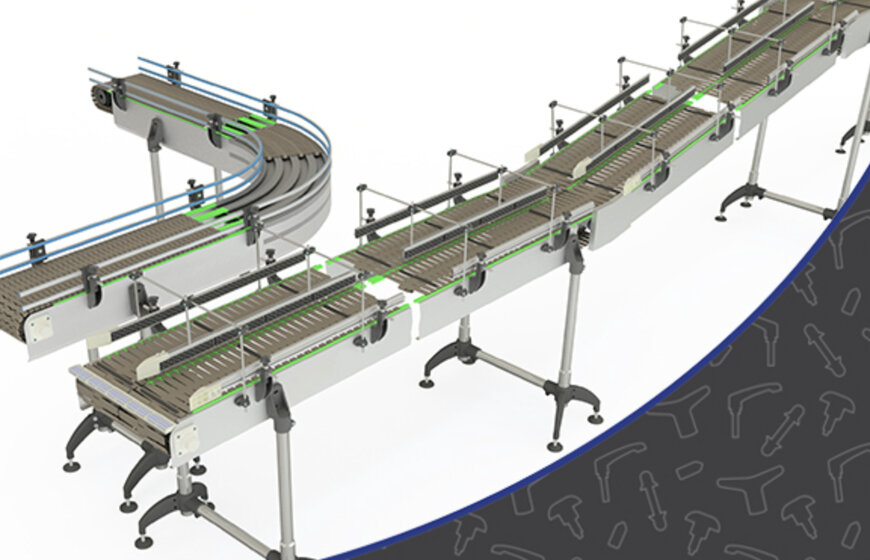
KIPP’s solution comprises configurable foot elements, T-connectors, support heads and tube clamps compatible with tubes of diameters 48.3 mm and 60.3 mm per DIN EN 10220. The modularity allows designers and technicians to assemble stable frameworks tailored to specific conveyor layouts, integrating both guidance and structural support functions into one platform.
Support elements serve as anchoring points for vertical and horizontal loads. Depending on the configuration, elements in this range support static loads from approximately 1.5 kilonewtons (kN) up to 9.6 kN, offering designers measurable criteria for structural safety and deformation resistance under operational load.
Design Features and Materials
Material selection emphasizes durability and corrosion resistance, important in environments such as food processing where washdown procedures and hygiene considerations are prevalent. Support and guidance parts are designed for robustness against deformation and wear, ensuring long service life without frequent replacement or realignment.
The lateral guidance elements include adjustable holders that attach to conveyor structures and accept pins and clamps with variable positioning. These holders enable fine adjustment of lateral guide elements relative to the conveyor belt, allowing products of differing widths or profiles to be guided consistently.
Application Areas and Technical Use Cases
In packaging lines, lateral guidance is critical when items of varied shapes and sizes need to be held in a consistent path through filling, labeling and inspection stations. The modular nature of the system allows quick reconfiguration to handle different product formats with minimal mechanical changeover. In automation technology, stable support elements reduce vibration and structural deflection that can interfere with robotic pick-and-place or vision systems.
Integration and Installation
Installation of these elements is compatible with both new conveyor builds and retrofits. The foot and connector components provide mounting points that can be integrated into existing structural frameworks without requiring bespoke machining. The use of standardized tube sizes (48.3 mm and 60.3 mm) aligns with common industrial profiles, facilitating replacement and interoperability.
Benefits and Operational Impact
By providing precise alignment and modular configurability, these components aim to reduce conveyor downtime and maintenance effort. Precise lateral guidance reduces product drift and potential jams, thereby improving throughput reliability. Adjustable support elements also simplify maintenance adjustments without specialized tools, shortening service intervals.
KIPP Scandinavia AB’s modular lateral guidance and support elements address core mechanical needs in conveyor systems where stability, alignment and process reliability are essential. Measurable load capacities and compatibility with standard industrial profiles make the system relevant for engineers designing or upgrading conveyor lines in sectors such as packaging, food processing and automated manufacturing.
www.kipp.se
