
www.foodpackautomation.com
22
'26
Written on Modified on
Modified-atmosphere packaging supports long-haul dragon fruit exports
StePacPPC adapted its Xtend MA/MH bulk films to manage respiration and moisture during three-week ocean shipping from Ecuador to the US and Europe.
www.stepac.com
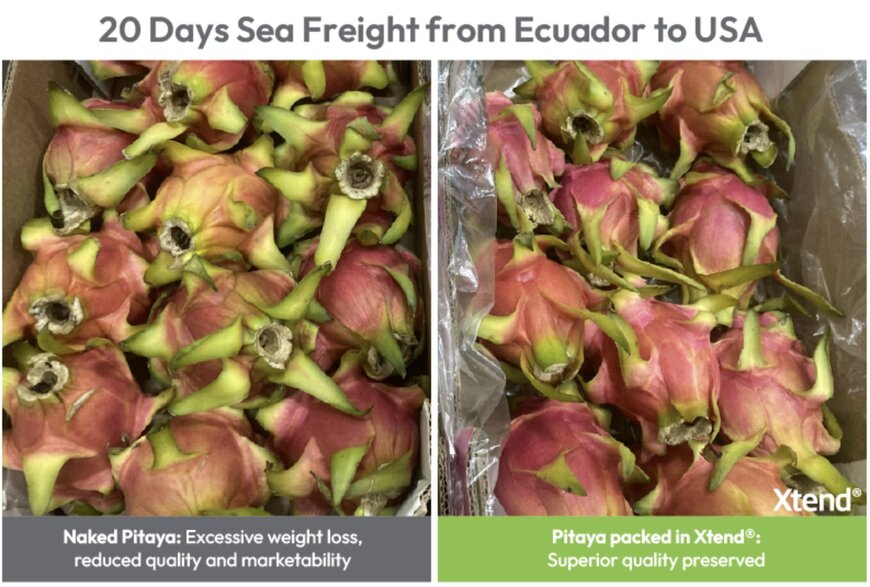
Exporting pitaya (dragon fruit) by sea is limited by dehydration, rapid respiration, and postharvest microbial decay, with quality losses often appearing within days of harvest. In this context, StePacPPC has developed an Xtend® Modified Atmosphere/Modified Humidity (MA/MH) packaging format designed to preserve pitaya freshness and appearance during long ocean transport.
Why pitaya shipments struggle over long sea freight
Pitaya is cultivated across Central and South America and is increasingly traded into distant markets, but the fruit’s postharvest behavior makes it sensitive to long distribution cycles. Routes such as Ecuador to North America and Europe can take three weeks or more, creating extended exposure to moisture loss and physiological aging even in cold chain conditions.
During shipment, pitaya can lose weight, develop shriveling of skin and bracts, and show reduced peel brightness. The same storage window also increases the probability of microbial decay, reducing visual appeal and marketability on arrival.
Adapting MA/MH films to pitaya’s postharvest profile
StePacPPC’s solution is based on adapting its Xtend® MA/MH bulk packaging films to match the specific postharvest requirements of pitaya. The packaging is designed to balance oxygen and carbon dioxide concentrations while providing moisture control, targeting three primary deterioration drivers during sea transport: dehydration, excessive respiration, and decay development.
By controlling the internal atmosphere and humidity, the packaging is positioned to reduce dehydration and slow respiration. The design intent is to keep the fruit within an acceptable physiological range for longer periods, reducing the speed of visual and textural decline during extended storage.
Moisture management aims to protect peel gloss and bract firmness
A key quality indicator for pitaya is the condition of the bracts, which can curl and wilt under dehydration. The new film is designed to support moisture retention to help keep bracts firm and maintain the fruit’s glossy appearance and vibrant peel color.
StePacPPC reports that development of the pitaya-specific packaging took more than three years and included repeated visits and collaboration with exporters to optimize postharvest handling, packaging design, and overall shipment performance.
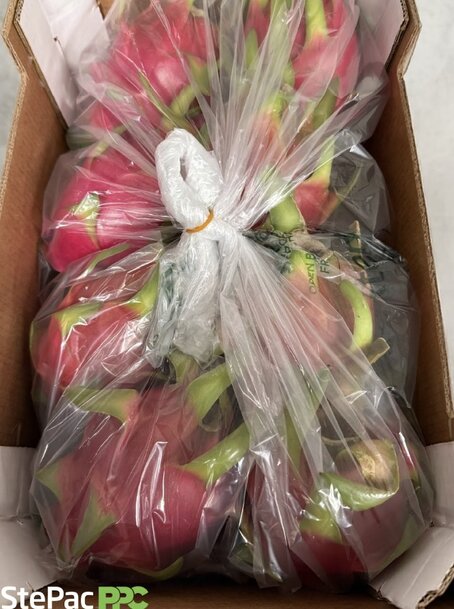
How MAP performance is engineered in the film structure
The packaging approach follows modified atmosphere packaging principles: slowing respiration, inhibiting ethylene production and action associated with ripening and senescence, and suppressing microbial decay mechanisms.
StePacPPC differentiates the technology through film structure options that combine antifog properties with selectable water vapor transmission rates (WVTR). This enables tighter moisture control tuned to produce behavior, balancing microbial risk reduction against excessive weight loss, while maintaining visibility of the packed product. In combination with the modified atmosphere environment, the objective is to extend shelf life beyond what conventional packaging systems typically deliver in long-haul shipping.
Broader portfolio: tropical fruit shipping formats
The pitaya-specific film joins StePacPPC’s existing portfolio aimed at tropical fruit exports, including solutions for bananas, passion fruit, lychee, longan, rambutan, mango, and papaya.
For passion fruit shipments from Colombia to North America and Europe, StePacPPC cites Xtend® bulk and Xgo™ flow-pack retail formats as widely adopted solutions designed to extend shelf life during weeks-long cold-chain logistics. In South Africa, the company also highlights the use of preformed bulk and retail bags for green bananas, where ripening occurs in the sealed bag and the internal atmosphere is intended to slow ripening and widen distribution and consumption windows.
What this changes for exporters
For growers and exporters, long sea freight traditionally forces trade-offs between destination distance and arrival quality. By targeting respiration control and moisture retention in the same package design, the pitaya format is positioned to support longer shipping routes while preserving market-critical appearance attributes such as peel brightness and bract firmness—factors that influence acceptance, pricing, and waste rates at arrival.
www.stepacppc.com
