
www.foodpackautomation.com
17
'26
Written on Modified on
Bio-based Cellulose Foam Replaces Plastic in Precision Electronics Logistics
Thorlabs Sweden AB partnered with Emballageteknik and Stora Enso to implement a renewable, shock-absorbing packaging solution for sensitive optical and electronic components.
www.storaenso.com
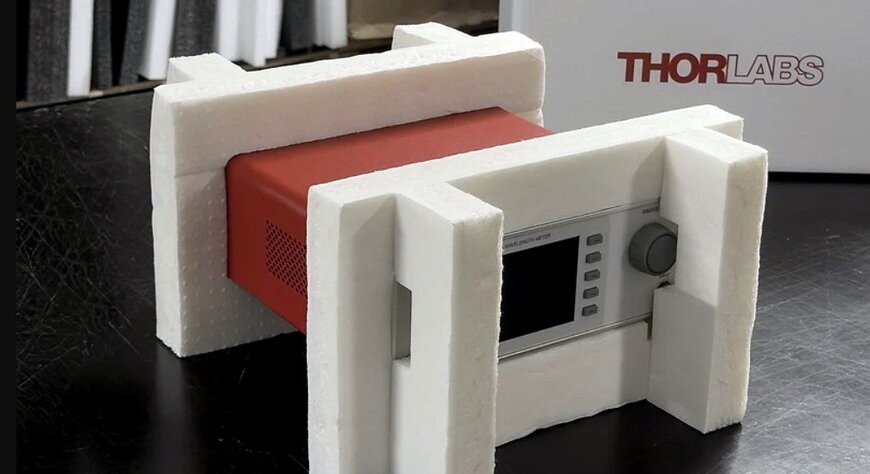
Global shipping of high-precision optical and electronic equipment requires specialized protective materials to prevent damage from mechanical shock, vibration, and contamination. In a collaboration involving Thorlabs Sweden AB and packaging converter Emballageteknik, fossil-based protective foams have been replaced with a wood-fiber alternative to support the transition toward a circular digital supply chain.
Technical Performance and Clean Handling
Sensitive technology, such as the photonics and optical components manufactured by Thorlabs, is susceptible to microscopic particles and electrostatic discharge. Conventional expanded polystyrene (EPS) and polyethylene (PE) foams often generate dust during handling and transport, which can compromise the performance of optical surfaces.
The implementation of Papira by Stora Enso addresses these requirements through a rigid yet lightweight cellulose structure. This bio-based foam is engineered to provide cushioning properties equivalent to petroleum-based polymers without the associated debris. According to technical validation performed by the partners, the material maintains its structural integrity and shock-absorbing capacity during global transit, ensuring products arrive in specified condition without reliance on fossil-derived materials.
Engineering for Scalable Manufacturing
To integrate this material into existing production lines, Emballageteknik applied precision converting processes, including specialized cutting and assembly techniques. The material’s compatibility with water-based adhesives and its suitability for standard die-cutting and waterjet cutting allow it to function as a drop-in replacement for traditional foams.
This scalability is a critical factor for the automotive data ecosystem and other high-tech industries where packaging must be both high-performing and adaptable to high-volume manufacturing. By combining material innovation with converting expertise, the partnership has demonstrated that renewable materials can meet the rigorous industrial standards required for protecting delicate electronic hardware.
Circularity and Material Standardization
The cellulose foam is derived from wood fibers sourced from sustainably managed forests and is designed for full integration into existing waste management systems. It has achieved a score of 100/100 in the Harmonized European Recyclability test (CEPI), confirming its compatibility with standard paper and board recycling streams.
Unlike composite or multi-material packaging that requires complex separation, this mono-material solution is biodegradable and plastic-free. Its use by Thorlabs Sweden AB validates the material for highly demanding applications, providing a technical benchmark for other sectors seeking to reduce their carbon footprint while maintaining stringent protection levels for high-value goods.
Competitive Context: Bio-based vs. Fossil Foams
While traditional PE and EPS foams have long been the industry standard for shock protection due to their low weight and high energy absorption, they remain reliant on finite fossil resources and are difficult to recycle in closed loops. The Papira foam provides a measurable alternative by matching the cushioning performance of PE while offering superior circularity metrics. Compared to other bio-based alternatives that may lack the rigidity required for heavy industrial components, this cellulose-based foam provides the structural stability necessary for protecting precision-engineered equipment.
www.storaenso.com
