
www.foodpackautomation.com
06
'26
Written on Modified on
Vacuum Conveying Technology for Food Material Handling
Hapman develops vacuum conveyor systems using regenerative blower technology to transport bulk food materials while reducing compressed air use and minimizing filter maintenance.
hapman.com
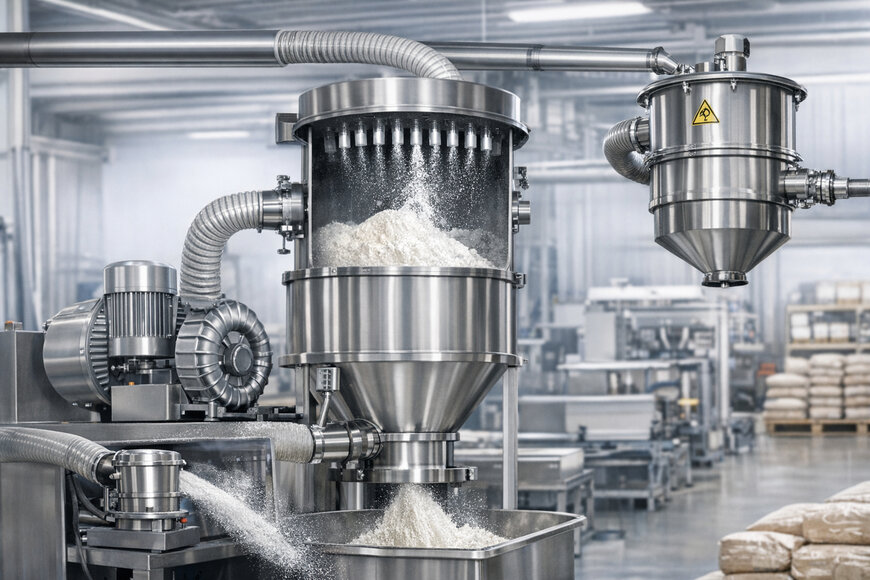
Vacuum conveying systems are widely used in food processing to transport powders, granules, and other bulk materials while maintaining hygienic conditions. Hapman has introduced a series of vacuum conveyors designed to move food ingredients efficiently while reducing compressed air consumption and improving filtration reliability.
Vacuum Conveying in Food Processing
Bulk material transport is a critical step in food manufacturing processes such as ingredient dosing, packaging, mixing, and batching. Vacuum conveying systems use negative pressure to move materials through enclosed pipelines, reducing contamination risk and limiting product exposure to the surrounding environment.
Hapman’s vacuum conveyor technology is designed for the handling of food ingredients including powders, grains, and granular materials. By using enclosed pipelines, the system supports hygienic material transfer while reducing dust emissions within processing environments. Such systems are typically applied in sectors such as bakery production, snack manufacturing, powdered beverage production, and food ingredient processing.
Regenerative Blower Technology and Air Efficiency
The conveying system operates using regenerative blower technology to generate vacuum pressure for material transport. Unlike systems that rely on plant compressed air, the blower produces the airflow required to move materials through the conveying line.
Compressed air systems are common in pneumatic conveying but can represent a significant operational cost due to the energy required to produce compressed air. By using a regenerative blower, the system reduces dependence on centralized compressed air infrastructure, which can lower energy consumption in facilities where conveying operations run continuously.
The airflow generated by the blower creates a pressure differential that draws product through the pipeline in dilute-phase conveying mode. Dilute-phase conveying moves materials suspended in airflow at relatively high velocities, a method commonly used for light powders and granules in food processing.
Reverse-Pulse Filtration System
Material separation at the receiver stage is managed through filtration. Hapman’s vacuum conveyors incorporate a reverse-pulse filter cleaning system designed to maintain filtration performance during continuous operation.
In reverse-pulse cleaning, compressed air pulses periodically dislodge accumulated particles from filter surfaces. The released particles fall back into the product stream while the filters regain permeability. This process helps maintain airflow and reduces pressure loss across the filtration unit.
Maintaining filter efficiency is essential in food manufacturing environments where production lines operate for extended periods. Automated cleaning systems reduce the frequency of manual filter maintenance and help limit downtime associated with clogged filtration components.
System Configurations for Different Processing Environments
The vacuum conveyor line includes several system configurations designed for different installation and safety requirements.
The MiniVac model uses dilute-phase vacuum conveying and allows flexible pipeline routing around equipment or structural obstacles. This flexibility is relevant in retrofitting existing production lines where space constraints limit equipment placement. The system is available in painted carbon steel or stainless steel configurations depending on hygiene requirements.
The LP Series is designed for installations where space is limited. Compact conveyor systems are often required in packaging areas or small processing rooms where large conveying equipment cannot be accommodated.
The E-Line configuration addresses safety requirements related to combustible dust. Dust generated from certain food ingredients such as flour, starch, and powdered sugar can form explosive atmospheres under specific conditions. The E-Line system is designed to withstand pressures up to 14.5 psi, providing containment protection for equipment and personnel in environments where dust explosion risks must be managed.
Applications in Bulk Food Material Handling
Vacuum conveying systems such as these are commonly integrated into automated food processing lines where consistent material transport is required. Typical applications include transferring flour to mixers, conveying powdered additives to batching systems, and moving granular ingredients to packaging equipment.
By using enclosed conveying lines, processors can reduce product contamination risks, limit dust emissions, and maintain controlled material flow between processing stages. The design also supports flexible plant layouts because pipelines can be routed vertically or horizontally across production areas.
Company Background
Hapman designs and manufactures custom bulk material handling equipment used in industries including food processing, chemicals, minerals, and plastics. The company has developed material transport systems for more than 80 years, focusing on conveying technologies for powders, granules, and other bulk solids.
Its equipment portfolio includes mechanical conveyors, pneumatic conveying systems, feeders, and bulk handling solutions used in industrial manufacturing and processing environments.
www.hapman.com
