
www.foodpackautomation.com
16
'26
Written on Modified on
Rollon linear systems meet food processing hygiene demands
Solutions address hygiene, corrosion resistance, and high-cycle performance requirements in food production environments with customizable architectures for diverse industrial applications.
www.rollon.com
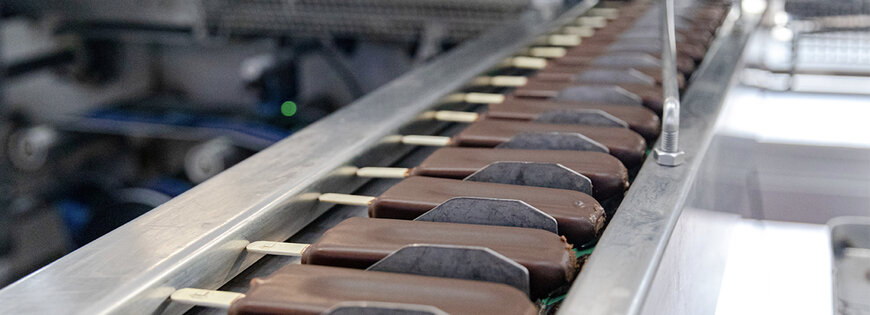
The food processing industry, including meat, dairy, bakery, and packaging operations, requires linear motion systems capable of maintaining performance under high-cycle operation, strict hygiene standards, and aggressive cleaning conditions. In this context, Rollon provides linear motion solutions engineered to ensure operational continuity, contamination control, and durability across demanding production environments.
Food processing lines involve continuous handling, transfer, and packaging of products, often under 24/7 operation. Linear systems must therefore combine speed, repeatability, and resistance to environmental stress while integrating into highly customized machine designs.
High-frequency operation and system durability
Applications such as pick-and-place, filling, and product transfer impose repeated acceleration and deceleration cycles, frequent directional changes, and high travel speeds. Under these conditions, maintaining positioning accuracy and mechanical stability over time is essential to avoid production interruptions.
Rollon addresses these constraints with actuators, linear guides, ball screws, and rod ends designed for sustained dynamic loads. Structural profile stiffness reduces vibration during rapid movements, preserving both product integrity and component lifespan. This contributes to predictable wear behavior and minimizes unplanned downtime, supporting overall equipment effectiveness (OEE) in continuous production environments.
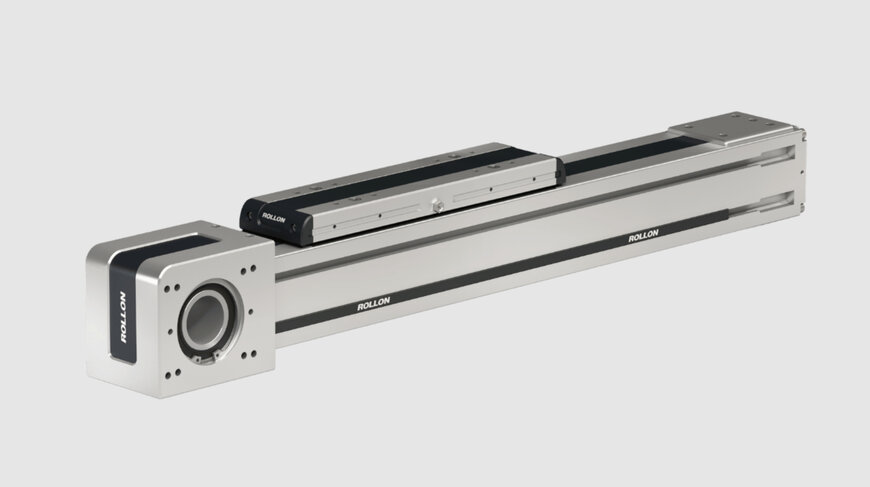
Contamination control through sealed and food-grade systems
Preventing contamination is a central requirement in food processing, where even indirect contact components must avoid releasing particles or lubricants into the production environment.
Rollon integrates food-grade lubrication compliant with FDA and European standards to eliminate risks associated with conventional greases. In addition, linear actuators such as the Plus series incorporate recirculating ball bearings with integrated lubrication reservoirs, enabling controlled lubrication over extended operating periods while reducing maintenance frequency.
For environments requiring higher protection, sealed linear axes such as the ELM actuator provide isolation between internal components and external contaminants. These systems feature enclosed structures that prevent ingress of liquids and residues and can be pressurized up to 0.7–0.8 atmospheres, offering an additional barrier in hygiene-critical applications.
Corrosion resistance in aggressive cleaning environments
Daily sanitization procedures using high-pressure water, steam, and chemical detergents expose motion systems to corrosion risks that can affect mechanical performance.
To address this, Rollon offers corrosion-resistant configurations with stainless steel guides and carriages, as well as surface treatments such as nickel or zinc plating for structural components. Belt-driven systems incorporate stainless steel reinforcement strands to maintain tensile strength and resistance to chemical exposure.
These design choices reduce the risk of surface degradation, preserve positioning repeatability, and extend service life, limiting both maintenance interventions and component replacement.
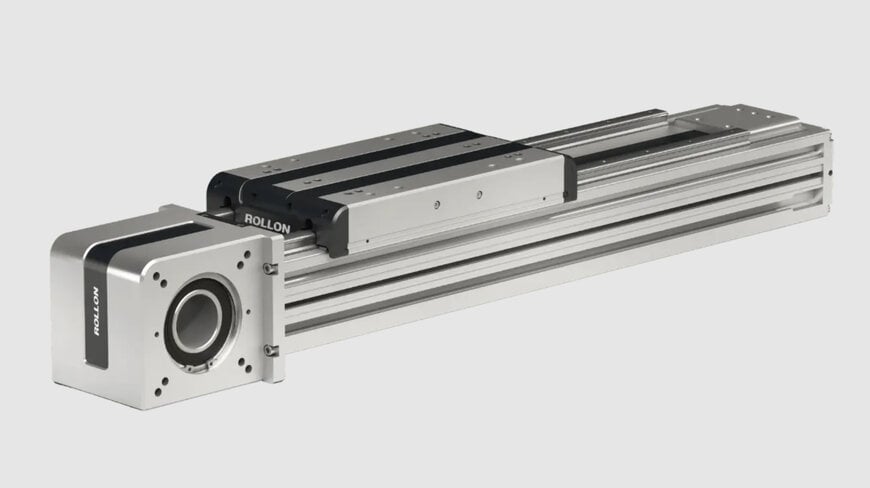
Customization for complex production layouts
Food processing machinery is typically designed for specific products, production volumes, and plant configurations, requiring linear motion systems that can be adapted both geometrically and functionally.
Rollon supports this variability through co-engineering with machine manufacturers, enabling the development of application-specific solutions. This includes adapting dimensions, load capacities, environmental protection levels, and performance characteristics to match operational requirements.
By integrating customization at the design stage, linear systems can be optimized not only for technical compatibility but also for long-term reliability and efficiency within the overall machine architecture.
Applications in food processing systems
These linear motion solutions are suited to a wide range of applications, including:
- Automated pick-and-place systems in packaging lines
- Transfer and positioning systems in meat and dairy processing
- Filling and dosing equipment requiring synchronized motion
- Palletizing and end-of-line automation
In these applications, the combination of durability, hygiene compliance, and adaptability enables consistent production performance while meeting regulatory and operational constraints.
Edited by Natania Lyngdoh, Induportals Editor — Adapted by AI.
www.rollon.com
Edited by Natania Lyngdoh, Induportals Editor — Adapted by AI.
www.rollon.com
