
www.foodpackautomation.com
01
'26
Written on Modified on
High-speed coding for compliant packaging lines
Markem-Imaje introduces industrial coding systems to support regulatory compliance and throughput in FMCG packaging.
www.markem-imaje.com
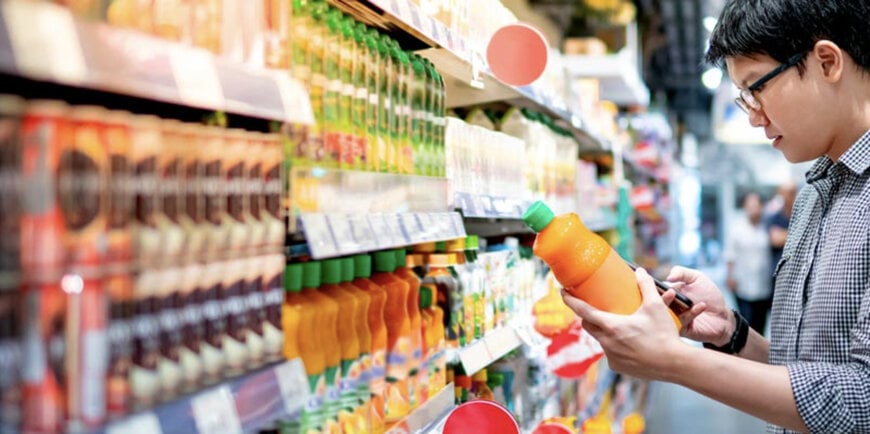
FMCG manufacturers in EMEA are adapting packaging lines to meet new regulatory and data requirements, including the EU Packaging and Packaging Waste Regulation (PPWR) and Digital Product Passport (DPP). Markem-Imaje has introduced high-speed marking and coding technologies designed to enable data-rich 2D codes while maintaining production efficiency in a digital supply chain context.
Regulatory-driven shift to 2D codes
The transition from traditional 1D barcodes to GS1 Digital Link–enabled 2D codes is accelerating, driven by initiatives such as GS1 Sunrise 2027 and regulatory frameworks including DPP and the US Food Safety Modernization Act (FSMA). These requirements increase the volume and granularity of product data embedded directly on packaging.
This shift requires coding systems capable of handling dynamic data structures, including batch-level traceability, serialisation and lifecycle information, without reducing line speed. In response, Markem-Imaje presented end-to-end identification and traceability solutions at interpack 2026 (7–13 May, Düsseldorf), focusing on integration across the automotive data ecosystem like supply chain architectures used in FMCG.
High-speed printing and verification capabilities
A key technical constraint in high-volume FMCG production is the ability to print and verify complex 2D codes at industrial speeds. Markem-Imaje reports that its latest systems support printing and verification of dynamic 2D codes at rates of up to 100,000 units per hour, depending on substrate and line configuration.
The 9712 Bi-Jet continuous inkjet system is designed for medium- to heavy-duty production lines and delivers up to twice the throughput or print volume compared to previous generations. This increase is achieved through dual-jet architecture, enabling parallel ink streams and higher marking density without compromising code quality.
Complementing this, Super Piezo Inkjet (SPI) technology enables high-resolution printing on both flat and curved surfaces, supporting line speeds of up to 120 m/min. Integrated vision systems provide real-time verification of printed codes, reducing rework rates and ensuring compliance with GS1 standards.
Label-free packaging and sustainability compliance
Sustainability requirements under PPWR are influencing packaging design, particularly regarding recyclability and material reduction. Direct-to-substrate printing technologies are being adopted to eliminate adhesive labels.
Markem-Imaje’s Touch Dry-based systems enable direct-to-box printing of barcodes, text and graphics using wax-based, solvent-free inks without volatile organic compounds (VOCs). This approach reduces packaging material complexity and supports recyclability targets while maintaining print durability and contrast required for machine readability.
Software integration and traceability
The increasing demand for traceability across the value chain requires integration between marking hardware and enterprise systems. Markem-Imaje’s CoLOS software platform connects coding equipment with ERP and production systems, enabling centralised control, data consistency and real-time updates.
This integration supports serialisation and aggregation processes, allowing products to be tracked from unit level to pallet. It also facilitates compliance with GS1 Digital Link standards by ensuring consistent data structures across distributed production environments.
Production efficiency under operational constraints
Labour shortages and cost pressures are driving automation and simplification in packaging operations. Coding systems such as thermal transfer overprinters (TTO) are used for flexible packaging applications, enabling rapid format changes and reduced manual intervention.
Laser-based systems, including UV laser coders, are also being deployed for high-speed environments requiring permanent marking with minimal thermal impact. These systems support continuous operation with low maintenance requirements, contributing to higher overall equipment effectiveness (OEE).
Expanding role of connected packaging
Beyond compliance and traceability, 2D codes are enabling new forms of consumer interaction. GS1 Digital Link codes act as a bridge between physical packaging and digital content, allowing access to product information, authentication data and sustainability credentials.
This development transforms packaging into an interactive interface within the digital supply chain, supporting both operational transparency and consumer engagement. A single code can serve multiple stakeholders, including retailers managing inventory and consumers verifying product origin.
Industry context
The convergence of regulatory compliance, high-speed production and data-driven operations is redefining coding and marking requirements in FMCG manufacturing. Solutions that combine hardware performance, software integration and standards compliance are becoming essential to maintain throughput while meeting evolving regulatory and market expectations.
Markem-Imaje’s portfolio reflects this shift toward integrated, high-performance systems designed to support both operational efficiency and end-to-end traceability in increasingly complex production environments.
Edited by an industrial journalist Sucithra Mani with AI assistance.
www.markem-imaje.com
