
Consortium develops automated circular system for reusable food packaging
AUSOLAN, AWAYTER, ITC Packaging, and AIMPLAS collaborate on the ReLoop project to integrate food dispensing and packaging return in a closed-loop system.
www.aimplas.net
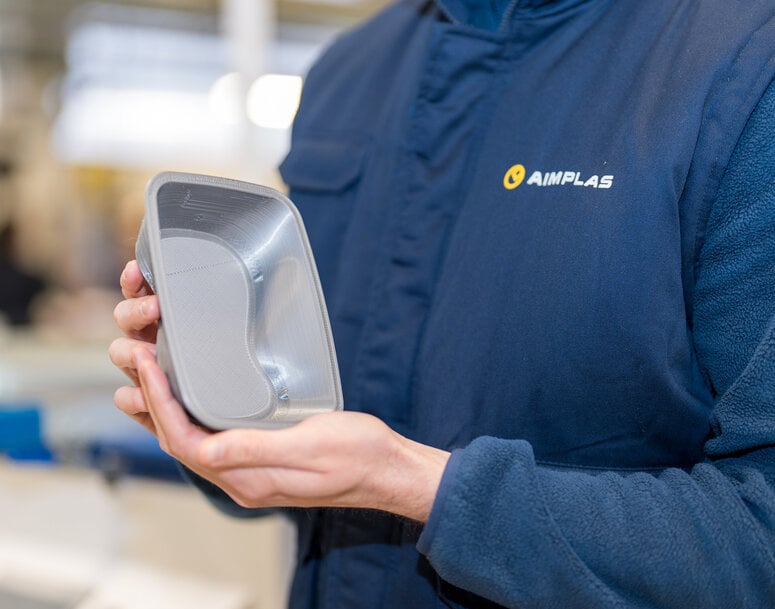
Global plastic production reached over 400 million tonnes annually, with approximately half designed for single-use applications. In response to environmental pressures and regulatory frameworks such as Spain’s Law 7/2022, which applies a tax of €0.45 per kilo on non-reusable plastic packaging, the ReLoop project was initiated on April 30, 2026. This initiative involves a consortium including AUSOLAN, a catering service provider; AWAYTER, an IoT and self-service hardware developer; ITC Packaging, a packaging manufacturer; and AIMPLAS, a plastics technology centre. The group is developing a system that combines the automatic dispensing of prepared meals with the recovery and reuse of plastic containers in a closed loop.
Technical development of reusable packaging
The technical foundation of the project relies on the development of containers capable of withstanding a minimum of 40 usage cycles. To achieve this durability, the consortium is evaluating specific materials that maintain food safety standards and structural integrity after repeated industrial washing and drying processes. Research conducted by AIMPLAS focuses on material science to ensure that the packaging remains functional and hygienic over its intended lifespan. This durability is intended to reduce the carbon footprint by an estimated 90% to 95% compared to single-use alternatives.
Automated canteen and container traceability
The operational aspect of the ReLoop system involves a digital canteen service designed for 24-hour availability. AWAYTER is developing automated hardware that facilitates food booking, contactless payment, and the subsequent return of containers within a single unit. A key technical requirement is the implementation of a tracking system to monitor the journey and usage count of each individual container. This traceability allows the consortium to verify the effectiveness of the reuse cycle and ensure containers are retired and recycled only at the end of their viable mechanical life.
Sanitization and implementation in collective catering
Ensuring food safety requires the establishment of rigorous washing and drying protocols tailored to the specific geometry and material properties of the reusable containers. Precise drying is necessary to prevent microbial growth and maintain hygiene. The ReLoop model is primarily intended for deployment in communal catering environments, where the closed-loop logistics of food distribution and container recovery can be managed as a unified process. The project is supported by the Spanish Ministry of Science, Innovation and Universities and co-funded by the European Union through the ERDF.
Edited by an industrial journalist, Lekshman Ramdas, with AI assistance.
www.aimplas.com
