
www.foodpackautomation.com
05
'26
Written on Modified on
Dry Molded Fiber Trays for Food Packaging
PulPac and Zipform Packaging collaborate to develop fiber-based meat trays using licensed Dry Molded Fiber technology for industrial food packaging applications.
www.pulpac.com
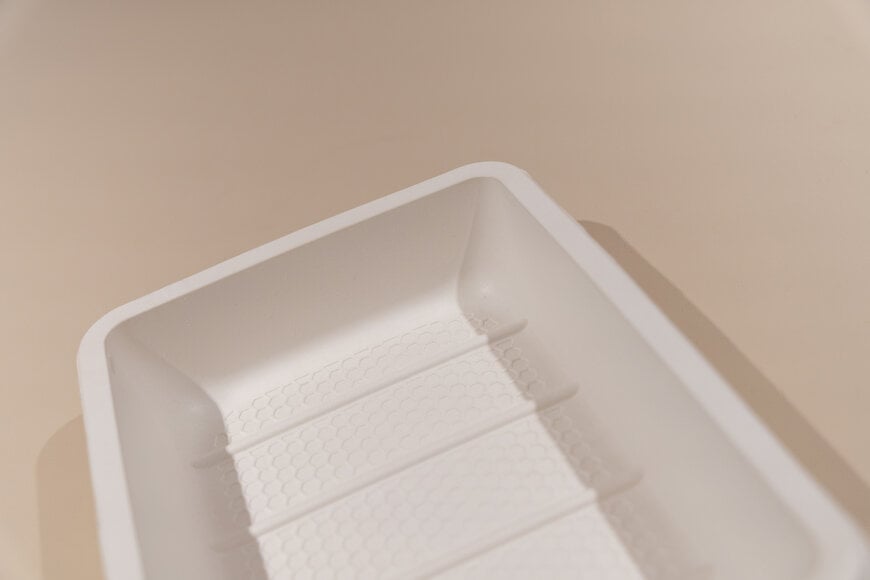
PulPac and Zipform Packaging are cooperating to develop Dry Molded Fiber meat trays, applying licensed fiber-forming technology to fresh food packaging. The initiative targets industrial-scale production of fiber-based alternatives for protein packaging systems.
Context of the Cooperation
PulPac, a technology provider specializing in Dry Molded Fiber processes, has granted a license to Australia-based Zipform Packaging, a manufacturer of fiber and composite packaging. The cooperation addresses a technical challenge in food packaging: replacing plastic trays while maintaining structural performance, hygiene, and liquid management.
The collaboration extends to PA Consulting, which supports product development and engineering. Additional R&D funding from Meat & Livestock Australia contributes to aligning the solution with meat industry requirements. Cooperation is required due to the integration of material science, forming technology, and application-specific design under industrial constraints.
Technical Solution and Responsibilities
The solution is based on PulPac’s Dry Molded Fiber technology, a high-speed forming process that uses cellulose fibers to produce rigid packaging with reduced water and energy consumption compared to conventional wet molding.
Zipform is responsible for product design, industrialization, and adaptation to customer requirements within its existing manufacturing and distribution network. PulPac provides access to its patented forming technology and supports scale-up through its partner ecosystem. PA Consulting contributes engineering expertise, focusing on structural optimization and functionality integration.
A key technical feature under development is integrated liquid (purge) management within the tray structure. By designing absorbent or channeling features directly into the molded fiber geometry, the system may reduce or eliminate the need for separate absorbent pads. This shifts functionality from multi-component packaging to a single-material design, simplifying assembly and material streams.
Deployment and Implementation
Initial proof-of-concept trays have been tested with selected industry stakeholders, validating forming quality and functional performance. The next phase includes broader market validation, followed by industrialization.
Scale-up is expected to involve investment in production capacity through PulPac’s licensing network, enabling distributed manufacturing aligned with regional supply chains. Integration with existing packaging lines is a key consideration, particularly compatibility with sealing systems and cold-chain logistics.
Applications and Use Cases
The primary application is fresh meat packaging, where trays must manage liquid release, maintain mechanical integrity under load, and comply with food safety requirements. The approach is also applicable to other protein products and perishable goods requiring controlled moisture handling.
By embedding functionality into the material structure, the system supports simplified packaging configurations, potentially improving process stability and reducing component handling in automated lines—key aspects of industrial automation in food processing.
Results and Expected Impact
While quantitative performance data is not disclosed, the technical approach suggests reductions in material complexity and component count. Integrated functionality can improve recyclability and streamline production by eliminating secondary elements.
The cooperation demonstrates a model for scaling fiber-based packaging through licensing, combining technology access with localized manufacturing and application-specific engineering.
Edited by an industrial journalist Sucithra Mani with AI assistance.
www.pulpac.com
