
Adapting Pharmaceutical Packaging Automation for Sustainable Material Integration
Beckhoff Automation analyzes how flexible linear transport systems enable pharmaceutical manufacturers to process lightweight packaging materials without compromising production throughput.
www.beckhoff.com
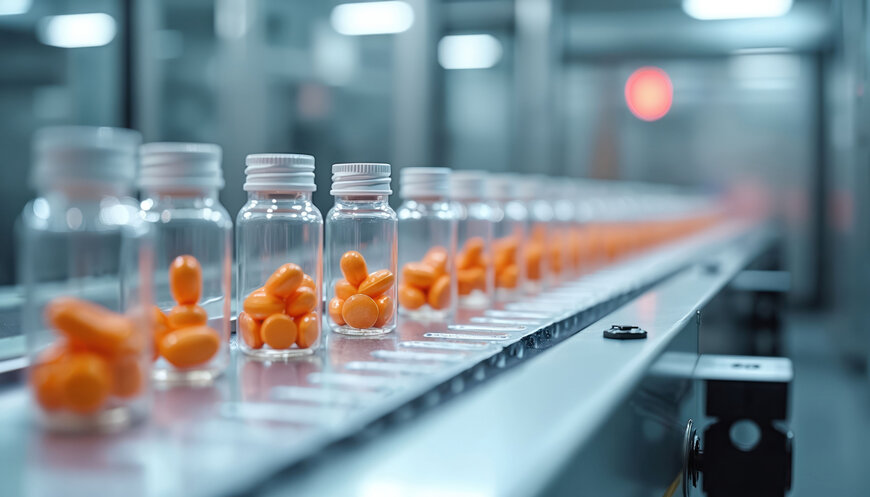
The transition toward sustainable packaging in the pharmaceutical sector requires simultaneous adjustments in both material science and production automation. As manufacturers replace conventional plastics with alternative materials such as plant proteins, fiber-based formats, and lightweight barrier resins, packaging lines must adapt to altered physical handling characteristics. To maintain processing speeds and regulatory compliance while integrating these new formats, linear transport systems and software-controlled automation are increasingly deployed in place of traditional mechanical handling systems.
Material Variations and Handling Parameters
Pharmaceutical packaging development involves multi-layer constructions, high barrier requirements, and sterility validation. Material changes directly affect line operation. For example, UK-based materials company Xampla recently secured a £14 million funding round to accelerate plant-protein-based packaging alternatives. Similarly, LOG Pharma Primary Packaging partnered with Dow to utilize HEALTH+ resins, developing a bottle that is up to 30 percent lighter than conventional high-density polyethylene (HDPE) containers while delivering twice the moisture barrier.
Other secondary and tertiary packaging initiatives involve wood, bamboo, fungi-derived, and fiber-based materials, such as mold-formed inserts and structural cardboard. Replacing heavy coated recycled boards with lighter board alternatives has demonstrated up to a 50 percent reduction in the packaging carbon footprint. However, a lighter or alternative container alters fill dynamics, conveyor speeds, sealing parameters, changeover routines, and quality-inspection criteria. Without equipment adjustments, these material changes can lead to longer changeovers, higher reject rates, extended cleaning cycles, and increased energy consumption.
Automation and Resource Efficiency
Manufacturing lines, including heating, ventilation, air conditioning (HVAC) systems, and cleanroom operations, are primary energy consumers in pharmaceutical facilities. A report by Mitsubishi Electric Europe indicates that the pharmaceutical sector produces 55 percent more greenhouse gases than the automotive industry.
Digitalization and process control are utilized to mitigate these emissions and optimize resource consumption. GlaxoSmithKline (GSK) has integrated advanced robotics and collaborative robots alongside human operators for packaging finished dosage forms. This deployment has resulted in higher throughput, consistent quality, and a reduction in repetitive strain injuries. Integrated sensor networks on these lines enable predictive maintenance, reducing unplanned downtime. In another biopharma facility, the installation of wireless sensors on steam traps reduced carbon dioxide emissions by 230 metric tons and saved approximately US $34,000 annually by optimizing a single asset type.
Implementation of Linear Transport Systems
Software-controlled automation provides the flexibility required to handle new packaging materials. Beth Ragdale, software business manager at Beckhoff Automation UK, notes that packaging material updates and automation must align to meet compliance and performance targets.
Pharmaceutical packaging specialist Uhlmann Pac-Systeme provides a practical implementation of this approach by integrating the Beckhoff XTS linear transport system into its Cartoner C 2155 for bottle packaging. The system replaces a conventional intermittent belt-driven transport mechanism with independently controlled magnetic movers. This modification increased machine output by 25 percent while reducing reject rates and improving line efficiency.
The software-based control of each product’s position enables accurate synchronization with downstream processes, facilitating the handling of varying packaging formats without mechanical tool changes. Additionally, the reduction of mechanical components and the open design support faster line clearance and sanitation processes required in Good Manufacturing Practice (GMP) regulated environments.
Additional Context: This section details technical specifications and competitive benchmarking not included in the original product announcement.
Linear transport systems (LTS), such as the Beckhoff XTS, utilize independent magnetic movers driven by linear servomotors along a stationary track. This architecture is competitively benchmarked against other independent cart technologies like B&R ACOPOStrak and Rockwell Automation MagneMover LITE. The primary technical advantage of LTS over conventional indexing belts or continuous-motion chains is the ability to adjust clamping forces, acceleration profiles, and pitch distances dynamically via software rather than mechanical changeovers. This capability is critical when handling lightweighted containers, such as the 30 percent lighter LOG Pharma bottles, because conventional mechanical pushers apply fixed uniform force that can crush or deform thinner-walled eco-materials. Individual mover control prevents container damage while maintaining high-speed synchronous motion.
Edited by an industrial journalist, Lekshman Ramdas, with AI assistance.
www.beckhoff.com
