
www.foodpackautomation.com
11
'26
Written on Modified on
Scalable Production System for Three Dimensional Molded Fiber Packaging
Valmet introduced an automated manufacturing technology to produce rigid, lightweight cellulose containers for the global sustainable packaging market.
www.valmet.com
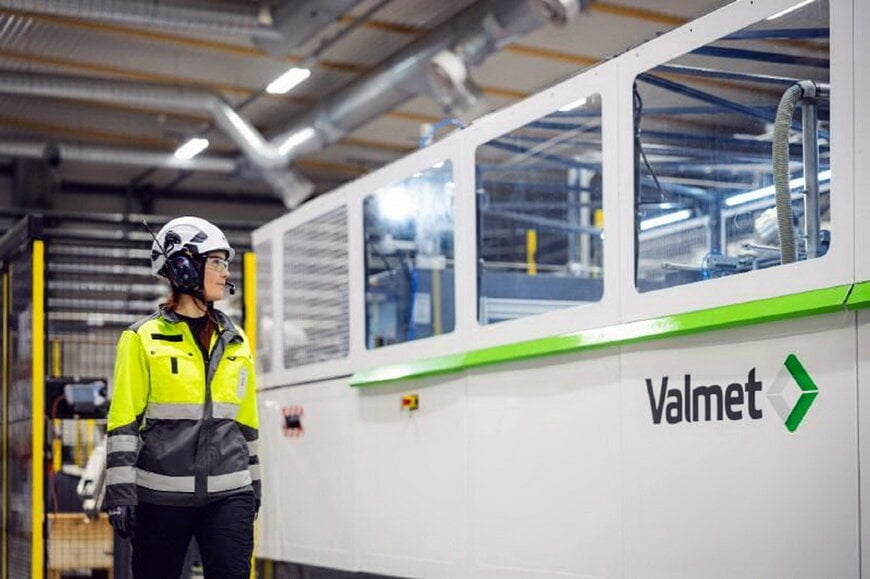
Valmet partnered with Metsä Spring to develop the Valmet 3D Fiber technology, an industrial production system designed for the high-capacity manufacturing of three-dimensional fiber packages. The system targets food service and consumer goods industries, providing a mechanical alternative to conventional plastic containers through advanced fiber manipulation.
Fiber Layering and High-Capacity Manufacturing Mechanisms
Traditional wet molded fiber processes often face throughput limitations due to extended drying times and single-layer deposition constraints. The new technology integrates a distinct fiber layering mechanism that deposits cellulose fibers in controlled, multi-layered configurations. This architectural control allows production facilities to optimize the strength-to-weight ratio of the final product, yielding thin-walled containers that maintain structural rigidity under mechanical stress.
By scaling up the automation and forming dynamics, the system achieves higher production speeds compared to legacy wet molding machinery. Integrated automation systems monitor material distribution and thermal curing parameters in real time, ensuring dimensional consistency across large manufacturing volumes.
Circular Material Flow and Industrial Application Cases
The manufacturing system is engineered for direct integration into industrial packaging lines, specifically targeting the production of food trays, plates, and protective consumer electronics inserts. In primary food packaging applications, the machinery processes virgin cellulose fibers to meet strict hygiene and structural requirements.
Resource efficiency is maintained through an integrated process design that captures and reprocesses internal side streams. Cuttings, trim waste, and out-of-specification units are automatically re-routed back into the raw material preparation phase. This closed-loop circulation minimizes raw material loss and reduces the fresh fiber input required per production cycle. The initial development of this production concept began in 2020 through a long-term research and development collaboration with Metsä Spring, validating the technology from pilot phase to commercial launch.
Additional Context
This section details technical specifications and competitive benchmarking not included in the original product announcement.
The molded fiber machinery market operates across two primary categories: traditional thick-walled molding and thermoformed (thin-walled) dry or semi-dry molding. Standard thermoformed fiber machines typically operate with cycle times ranging from 30 to 60 seconds per press, heavily restricted by the thermal conduction limits of dewatering wet pulp.
The Valmet 3D Fiber technology competes directly with high-end thermoforming fiber systems by utilizing multi-layer fiber deposition. While conventional systems rely on homogenous pulp slurry densities, multi-layer technology allows the selective placement of long and short fibers to maximize tensile strength without increasing overall basis weight. This approach aligns with European and global packaging waste regulations prioritizing source reduction and the elimination of single-use plastics, positioning the system against high-throughput polymer thermoformers in terms of structural performance per gram of material.
Edited by Evgeny Churilov, Induportals Media - Adapted by AI.
www.valmet.com
