
www.foodpackautomation.com
23
'26
Written on Modified on
OLFC flaking system for industrial oilseed processing
Bühler presents the OLFC flaking system to reduce vibrations and increase plant availability in continuous oilseed processing.
www.buhlergroup.com
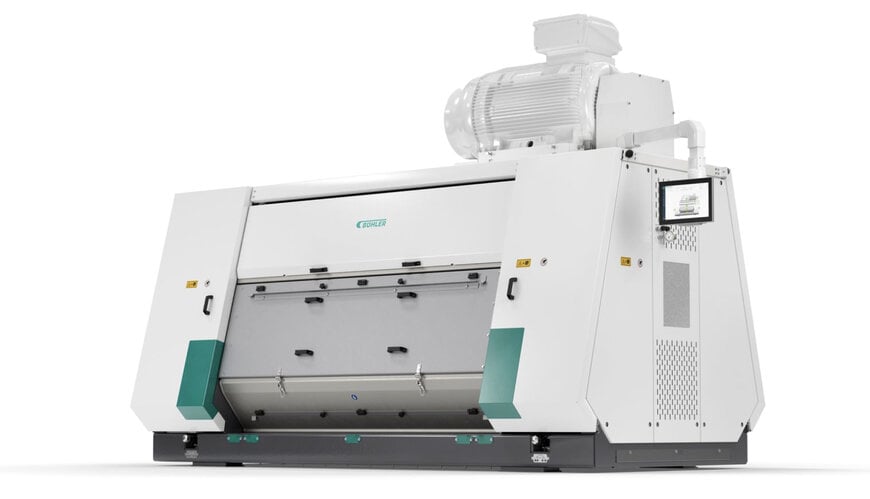
The Swiss technology group Bühler has launched the OLFC, a new flaking system for oilseed processing. The mechanical plant is designed for continuous industrial operation to press cracked seeds such as soybeans, rapeseed, and sunflower seeds into thin flakes prior to actual oil extraction.
Challenges in industrial oilseed processing
Plant operators in vegetable oil extraction rely on high mechanical reliability, as large-format flaking roller mills process up to 500 tons of material per day in continuous operation. Unplanned machine downtime significantly reduces throughput and disrupts tightly timed downstream extraction processes. At the same time, efficient chemical oil extraction requires high precision regarding flake thickness and uniformity. In conventional plants, continuous mechanical stress often leads to severe machine vibrations, which structurally limit the service life of bearings, drive belts, and the press rollers themselves.
Mechanical design and vibration reduction
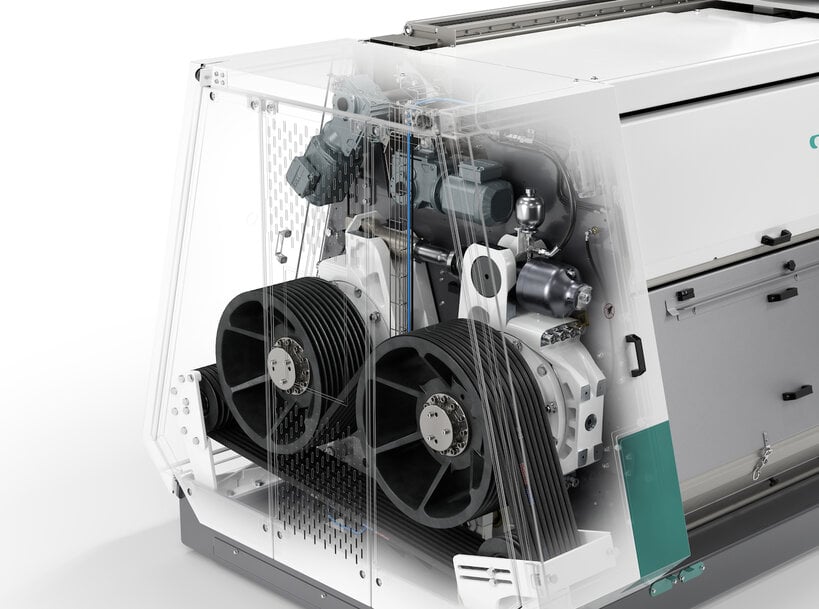
To minimize these structural loads during continuous operation, the OLFC features a specifically reinforced base frame and more massive castings in the bearing assembly. A modified motor mounting and pulleys with an increased diameter reduce mechanical belt stress during operation. Through these kinematic adjustments, machine vibrations are reduced by up to 25 percent compared to predecessor models. An improved hydraulic system also protects the roller mechanics from sudden pressure spikes that can occur, for example, due to foreign objects entering the process stream. Instead of conventional V-belt systems, the drive architecture relies on a timing belt for power transmission, which reduces the energy requirement of the solution by up to four percent.
Roller geometry and plant maintenance
The system operates with enlarged rollers featuring a diameter of 820 millimeters. Combined with an extended usable diameter range, this geometry increases roller service life by 150 percent, reducing the frequency of costly replacement intervals. For maintenance work, the plant integrates an auxiliary drive that rotates the rollers at low speed during the routine grinding process, thereby enabling safer intervention. Lukas Spannagl, R&D Project Manager Value Nutrition at Bühler, explains the technical approach: From the reinforced frame and reduced vibrations to longer-lasting rollers and simpler maintenance, we focused on developing a machine that delivers reliable performance throughout its entire lifecycle. This maintenance architecture saves around two hours of time per intervention, which corresponds to an additional processing capacity of roughly 41 tons in a standard plant.
Automation system and sensor technology
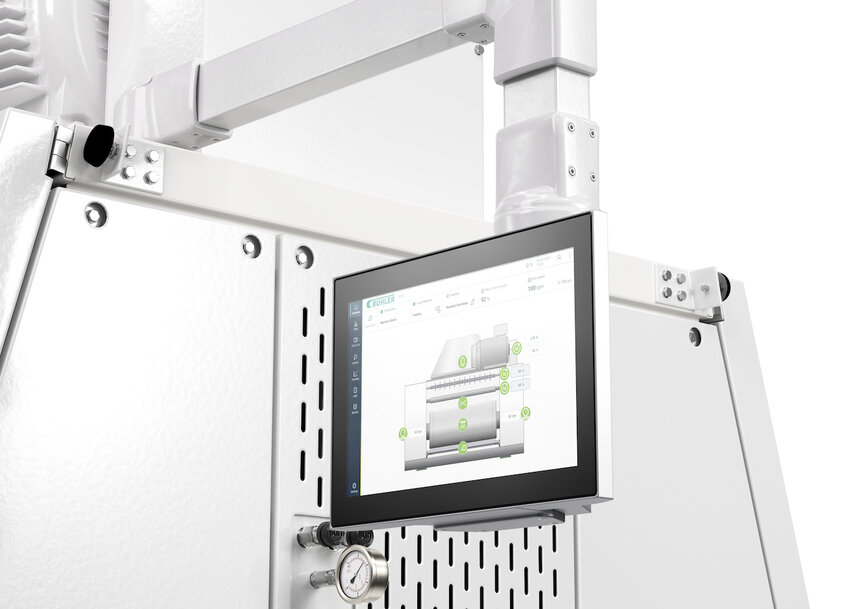
The mechanical hardware is complemented by a newly developed automation and sensor system that continuously records the machine's performance data. Operators receive real-time information on machine status via a touchscreen user interface. The collected sensor data can be fed directly into the Bühler Insights digital platform to predict maintenance needs and compare the performance of multiple flaking machines operated in parallel. The system design was validated under real production conditions by two prototype installations in commercial soybean processing plants in the USA prior to global market launch.
Additional context
This section contains technical specifications and competitive benchmarking not included in the original product announcement
In the global market for industrial flaking roller mills for oilseed processing, the Bühler OLFC competes with large-scale systems from manufacturers such as CPM Crown or French Oil Mill Machinery. While the industry standard for roller diameter in the high-performance sector traditionally sits at 800 millimeters (or approximately 32 inches for US-based manufacturers), the Bühler architecture differentiates itself through the slightly increased diameter of 820 millimeters. This geometric deviation not only increases the effective contact and cooling surface of the rollers during the pressing process, but primarily maximizes the chilled cast iron wear zone that can be removed through cyclic regrinding before a complete roller replacement becomes necessary. By additionally integrating direct digital condition monitoring via Bühler Insights, the system addresses the growing demand for predictive maintenance solutions in continuous extraction plants, where mechanical roller mills have historically often been maintained only reactively after the occurrence of overheating or vibration damage.
Edited by Maria Brueva, Induportals editor – adapted by AI.
www.buhlergroup.com
