
www.foodpackautomation.com
05
'26
Written on Modified on
JBT Marel upgrades ModularOven with smarter controls & safety
The upgraded MOS improves climate accuracy, diagnostics, component durability and network reliability, supporting consistent cooking and reduced maintenance downtime.
marel.com
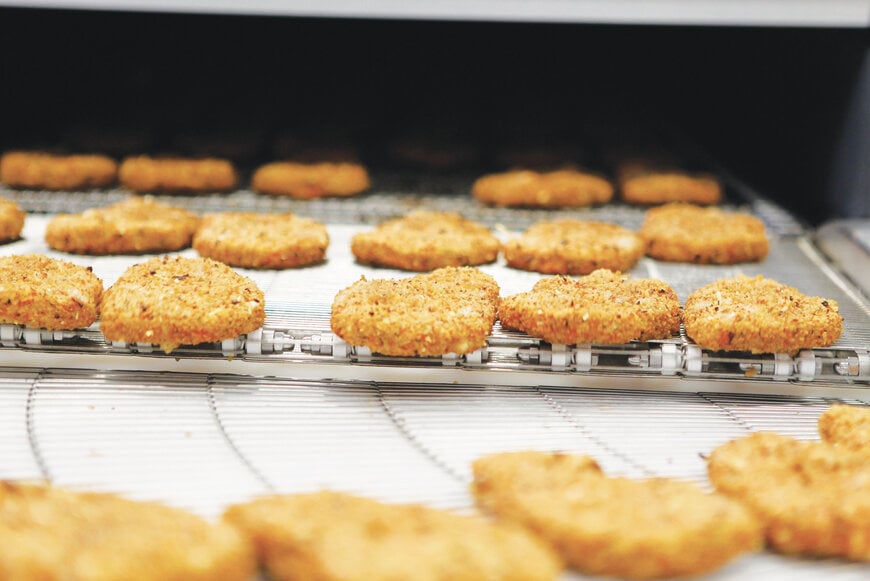
Continuous industrial cooking operations require precise thermodynamic control to maintain yield targets, moisture retention, and pathogen elimination across high-volume production lines. JBT Marel addresses these processing and maintenance challenges through an engineering upgrade of its ModularOven (MOS) platform, enhancing sensing accuracy, machine connectivity, and hardware reliability for prepared food, meat, and poultry processors.
Micro-Climate Control and Sensing Protection Engineering
Industrial steam and convection cooking relies on maintaining a stable thermodynamic balance between air temperature, humidity, and airflow velocity. The upgraded ModularOven integrates high-precision digital temperature sensors that reduce measurement drift and enable tighter micro-climate regulation directly at the product belt level. This control ensures repeatable core temperatures and consistent surface development across high-capacity product runs.
Sensing reliability in high-temperature, humid food environments often degrades during sanitation cycles. To prevent alkaline or acidic cleaning chemicals from degrading sensitive instrumentation, the MOS incorporates an automated dedicated blower system that shields the dew point sensor during cleaning-in-place operations. By eliminating direct contact with aggressive cleaning solutions, the blower mechanism extends sensor operating life and maintains accurate humidity readings without premature recalibration or replacement.
Predictive Diagnostics and Redundant Automation Architecture
Unscheduled downtime in continuous thermal lines disrupts both upstream forming and downstream freezing or packaging stages. The upgraded MOS utilizes an expanded array of digitally connected sensors linked to updated programmable logic controller (PLC) software. The PLC interface simplifies internal wiring harnesses and accelerates fault identification for plant technicians. In conjunction with AXIN machine software platforms and PRoCARE service frameworks, the architecture transmits telemetry data to facilitate remote diagnostic analysis before mechanical issues halt the line.
Network stability is reinforced through an upgraded redundant Ethernet infrastructure. By incorporating duplicate network pathways, the system maintains real-time communication between safety controllers, human-machine interfaces, and input/output nodes even during localized communication link interruptions.
Mechanical Robustness and Maintenance Safety Upgrades
Physical hardware updates enhance component longevity and technician safety during active line interventions. A specialized water pressure sensor monitors circulation filter differentials upstream of fluid delivery circuits, detecting early stage particulate accumulation. This proactive monitoring prevents cavitation and dry-run events in the fluid supply pump, preventing mechanical seal wear and motor failure. Exhaust ventilation circuits feature a redesigned, heavy-duty exhaust pressure sensor engineered to resist corrosive condensation and pressure fluctuations within industrial venting stacks.
Maintenance protocol safety is addressed through a dedicated handheld belt-run-enable switch. When maintenance personnel conduct inspection, cleaning verification, or service operations along the conveyor path, the manual enable device requires deliberate mechanical confirmation before running the conveyor belt drive, creating an interlocking fail-safe against unintentional line restarts.
Additional Context:
This section details technical specifications and competitive benchmarking not included in the original product announcement.
Industrial spiral and modular continuous ovens are benchmarked on core thermodynamic metrics, primarily evaporation loss control, temperature uniformity across belt widths, and mean time between failures (MTBF) of sensor arrays. Conventional two-zone impingement and spiral cooking systems frequently experience temperature variances of plus or minus 2 to 3 degrees Celsius across wide conveyor belts (typically 700 mm to 1000 mm widths). Upgraded digital resistance temperature detectors (RTDs) and targeted air circulation channels lower micro-climate temperature variation to within plus or minus 1 degree Celsius, which directly limits cook-loss variations across production batches.
Sensor degradation during daily sanitation protocols remains a leading source of calibration drift in industrial ovens. Standard ceramic and thin-film capacitive dew point sensors exposed to high-pressure hot water and sodium hydroxide cleaning solutions exhibit measurement drift exceeding 5% relative humidity per quarter if left unprotected. Protective isolation mechanisms, such as automated air-purge blowers and mechanical sensor shrouds, mitigate washdown contamination, maintaining sensing accuracy within 1.5% to 2% relative humidity across extended multi-shift sanitation cycles without requiring monthly recalibrations.
Edited by Natania Lyngdoh, Induportals editor, with AI assistance.
www.jbtmarel.com
