
www.foodpackautomation.com
24
'26
Written on Modified on
Paper-based tissue packaging with in-line adhesive application
IMA TMC developed STICK & PACK to apply adhesive in-line on paper reels, removing tissue producers' dependence on pre-glued packaging paper.
ima.it
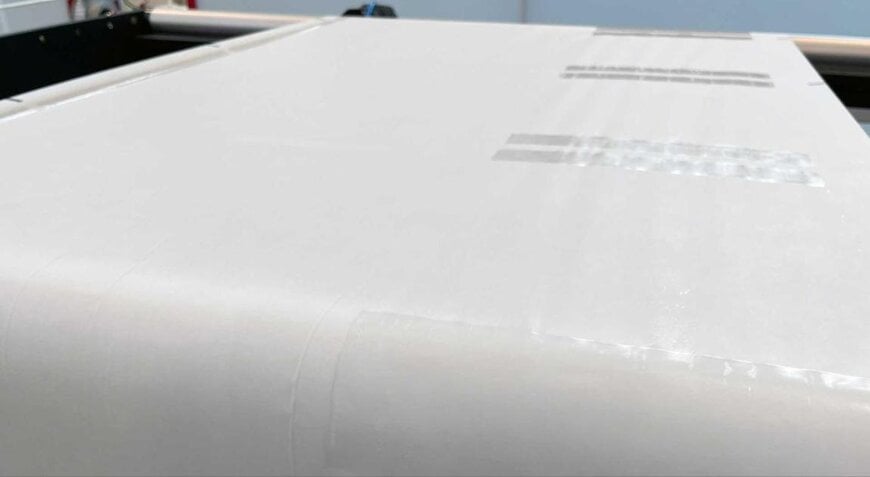
Tissue manufacturers moving from polyethylene film to paper packaging face a process problem as much as a material one: paper wrapping usually relies on reels supplied with adhesive already applied, which adds cost and ties producers to a limited number of converters. IMA TMC addresses this step with STICK & PACK, a system that applies adhesive directly to the paper reel on the packaging line.
Why Paper Packaging Changes the Tissue Packaging Process
Paper does not seal like polyethylene film, so closures depend on adhesive. When the adhesive is applied upstream by the reel supplier, the packer has little control over glue quantity, pattern or position, and must buy a more expensive, specialised consumable. Material substitution alone therefore does not guarantee stable throughput, consistent pack quality or controlled cost per pack.
How In-line Adhesive Application Works
STICK & PACK internalises adhesive application within the packaging process. Glue is applied in-line onto the paper reel in a controlled and precise manner immediately before wrapping, rather than being pre-coated by an external supplier. Because the application point sits on the line, the amount of adhesive can be adjusted and the application can be tailored to specific production requirements, such as format or paper grade.
According to IMA TMC, this approach improves process stability, reduces glue consumption and strengthens quality control of the finished pack, since the closing step is managed directly by the producer rather than defined by an upstream consumable.
Procurement Flexibility and Material Costs
Applying adhesive in-house removes the need to purchase pre-glued paper reels. Producers can source printed paper reels from any supplier, which simplifies procurement and increases production autonomy. Lower material costs result from two mechanisms: plain printed reels are a less specialised consumable, and adhesive quantity is optimised to what the closure actually requires.
Applications in Tissue Converting Lines
The system targets packaging lines for tissue products such as toilet rolls and kitchen towels, where producers are converting multipacks from plastic film to paper wrapping. In these lines, wrapping is the final step after converting and logs-to-rolls cutting, so closure reliability directly affects line efficiency and rejected packs. Placing adhesive control at the wrapper allows parameters to be corrected locally when paper properties or formats change.
Additional Context
This section details technical specifications and competitive benchmarking not included in the original product announcement.
The shift to paper-based secondary packaging in Europe is reinforced by the EU Packaging and Packaging Waste Regulation (EU) 2025/40, which entered into force in February 2025 and sets recyclability requirements for all packaging placed on the EU market from 2030. Fibre-based packaging generally fits established paper recycling streams, but adhesives must be applied in quantities and types compatible with repulping, which makes controlled glue dosing relevant beyond cost. The original announcement does not specify adhesive type, application method, line speed or compatible machine models; IMA TMC is the IMA Group brand specialised in tissue packaging and converting machinery.
Edited by Evgeny Churilov, Induportals Media - Adapted by AI.
www.imagroup.com
