
Tosca 2026 Report: Packaging as a Core Element of the Supply Chain
Tosca's 2026 sustainability report demonstrates how pooling solutions reduce damage to fresh produce by 6 to 9% and save up to 25% on transport costs.
www.toscaltd.com
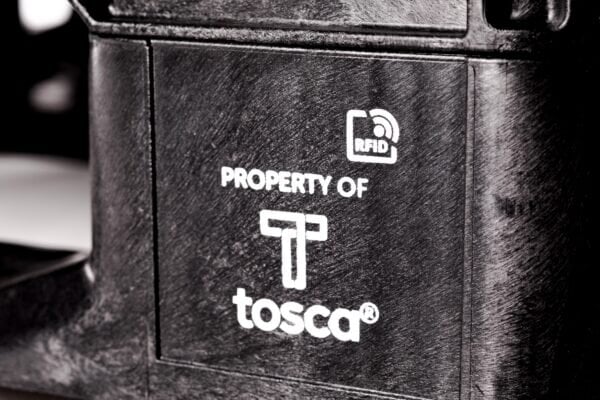
Tosca, a global leader in reusable packaging and pooling solutions, has published its 2026 sustainability report. The document calls on businesses to reconsider the role of transit packaging, treating it no longer merely as a purchased commodity, but as a strategic component of supply chain infrastructure. The study establishes a direct link between packaging selection, automation performance, product protection, and logistics efficiency.
As food supply chains become increasingly automated and face mounting pressure on costs and regulatory compliance, packaging choices increasingly influence operational performance. According to Eric Frank, CEO of Tosca, companies make major investments in optimising their equipment, labour, and transport flows, while too often continuing to evaluate packaging solely on its unit price. He emphasises that this approach overlooks its role in the smooth running of automated lines, product protection, and the efficient movement of goods, stating that packaging constitutes a genuine operational input that should be evaluated with the same rigour as the infrastructure surrounding it.
Measurable operational gains across the entire logistics chain
The report quantifies the tangible benefits delivered by reusable packaging and pooling models within customer operations. In terms of product protection, the structural rigidity of reusable crates limits damage during handling and transport, reducing damage to fresh produce by 6 to 9% on average, and by more than 50% in the case of eggs.
On the labour front, retail-ready reusable packaging saves 307 hours of work per 100,000 crates compared with corrugated cardboard packaging. Furthermore, better load space utilisation and fewer journeys reduce transport costs by up to 25% while lowering associated emissions. Finally, Tosca's reusable packaging solutions have eliminated 2.229 million tonnes of corrugated cardboard packaging from supply chains, removing the need for it to be recycled.
Environmental progress across Tosca's internal operations
Alongside the gains observed among its customers, Tosca reports significant progress in reducing the environmental footprint of its own operations. The company has recorded a 30% decrease in its global greenhouse gas emissions intensity (Scopes 1 and 2) per operating hour since 2021.
The share of electricity from renewable sources in its consumption reached 46% in 2025, up from 33% in 2022. Finally, the total volume of waste generated decreased by 41% compared with 2024.
Additional Context:
This section explains general principles related to closed-loop reusable packaging (pooling) and compatibility with automated intralogistics, not included in the original press release.
In warehouses equipped with high-speed conveyors, automated storage and retrieval systems (ASRS), and robotic palletisers, the dimensional stability of load units is critical. Unlike corrugated cardboard boxes—which are sensitive to cold-room humidity, prone to crushing under stacked loads, and generate fibre dust that fouls optical sensors—injection-moulded polypropylene or high-density polyethylene (HDPE) crates maintain consistent geometric tolerances and a uniform coefficient of friction on conveyor belts.
The economic and logistical model of pooling relies on a closed-loop cycle comprising the delivery of clean crates to producers, their dispatch to retailers, and the subsequent collection, sorting, inspection, and industrial sanitisation of empty containers before they are returned to circulation. The foldable design of these crates reduces their volume by up to 80% during empty return journeys, maximising lorry load density and offsetting the carbon impact associated with reverse logistics.
Edited by an industrial journalist, Lekshman Ramdas, with AI assistance.
