
www.foodpackautomation.com
06
'26
Written on Modified on
Industrial implementation of enzymatic degumming increases oil refining yield
GEA deploys the eTOP Degumming system to enhance process stability and reduce chemical usage at an existing edible oil processing facility.
www.gea.com

In the edible oil refining industry, degumming is a necessary step for physical refining and biodiesel pretreatment. Operators face the dual challenge of maximizing oil yield while minimizing the consumption of water and chemicals. Standard degumming processes often encounter difficulties with feedstock variability, which can lead to inconsistent phosphorus levels and higher operational costs due to heavy requirements for phosphoric acid and caustic soda.
GEA addressed these challenges by developing eTOP Degumming, an enzymatically supported version of its existing separation technology. The solution utilizes Novonesis Quara LowP enzymes to facilitate phospholipid conversion, paired with a final centrifugal separation stage. This stage uses nozzle separator technology to provide the mechanical robustness needed to handle varying feedstock qualities. By combining enzymatic conversion with a two-stage centrifugal architecture, the system maintains stable interface control and protects downstream processing from upstream fluctuations.
The process was deployed at an industrial site already utilizing GEA separation equipment. This existing infrastructure allowed for the direct integration of the enzymatic stage, facilitating a structured scale-up. Technical experts from Novonesis and GEA collaborated to calibrate the enzymatic application to the specific feedstock and operating conditions of the plant. This integrated approach ensured that the process design and separation technology were fully synchronized before the commencement of full-scale continuous operation.
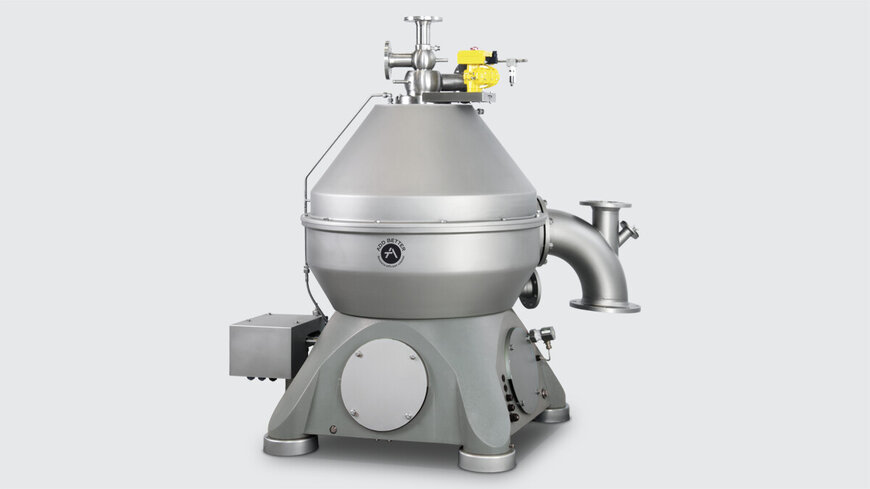
GEA separator designed for edible oil processing, providing stable separation performance in degumming and refining applications. Source: GEA
The implementation led to a measurable oil yield increase of 1.4 percent compared to the previous degumming method. Resource efficiency improved as acid consumption decreased by 75 percent and the use of caustic soda was eliminated. Process water requirements were reduced by 50 percent. Technical analysis confirmed that phosphorus levels remained consistently below 10 ppm, whereas they previously averaged above 20 ppm. Additionally, the reduced viscosity of the gums facilitated easier separation and improved overall plant stability during commissioning and daily operation.
Edited by an industrial journalist, Lekshman Ramdas, with AI assistance.
www.gea.com
