
www.foodpackautomation.com
06
'26
Written on Modified on
GEA Introduces meVap Product Family for Thermal Process Decarbonization
The meVap product initiative is a harmonized technology platform based on Mechanical Vapor Recompression (MVR).
www.gea.com
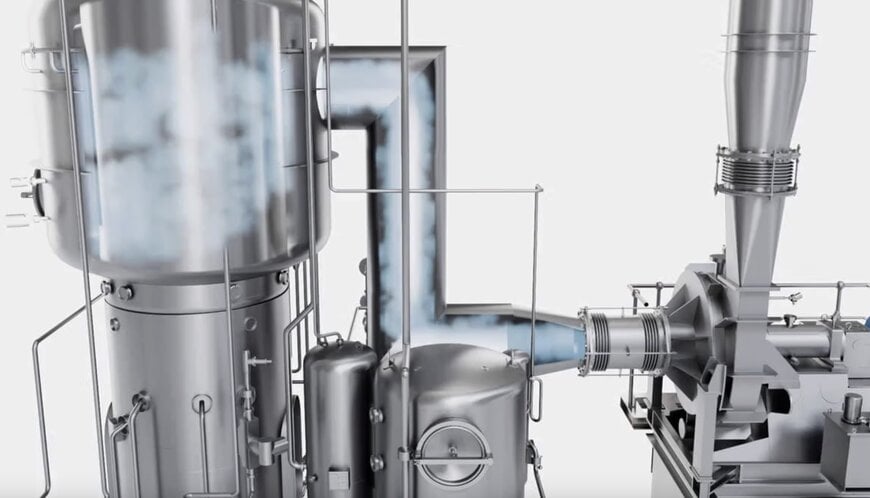
GEA launched the meVap portfolio utilizing Mechanical Vapor Recompression technology to provide electrified evaporation, distillation, crystallization, and steam generation solutions. The meVap product initiative replaces fossil-fuel-fired steam with electrically driven steam compression, aimed at reducing CO₂ emissions and operating costs for energy-intensive sectors including chemicals, pharmaceuticals, and food and beverage industries. The unifying technical principle across the portfolio is the use of electrically driven mechanical fans to generate a temperature rise, which increases thermal efficiency by recycling process steam.
Portfolio Components and Industrial Applications
The meVap family consists of four distinct electrified product areas:
- meVap Evaporation: Systems that utilize MVR technology for the continuous recycling of process steam to reduce energy consumption.
- meVap Distillation: Solutions designed for compression in primary or secondary circuits to enable the reuse of process steam in distillation processes.
- meVap Crystallization: Systems using recompressed steam as the primary heat source to maintain stable crystal formation and thermal performance.
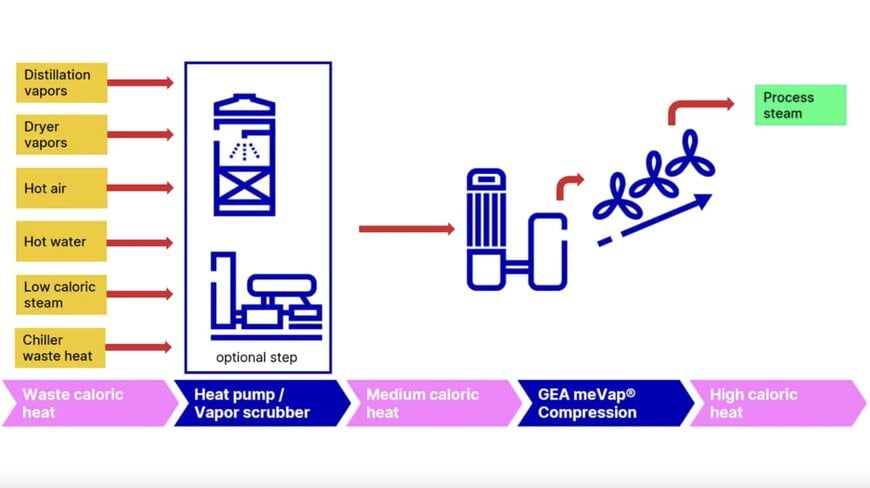
- meVap Compression: An industrial high-temperature heat pump solution that converts low-temperature waste heat into process steam for industrial operations.
Operational Efficiency and System Integration
The portfolio is designed to recover and reuse waste heat while minimizing dependence on fossil fuels through electrified steam generation. GEA utilizes an approach that combines process technology with digital support tools to maintain plant performance. These systems are intended to provide stable operation and high availability for energy-intensive thermal processes.
Additional Context
Mechanical Vapor Recompression (MVR) is an established energy-recovery process where centrifugal fans or compressors increase the pressure and temperature of waste steam, allowing it to be reused as a heating medium. In traditional thermal processing, steam is often used once and then condensed, wasting significant latent heat. By mechanically compressing this vapor, the energy required to generate fresh steam from fossil-fuel boilers is drastically reduced.
As industrial sectors face stricter decarbonization mandates, the electrification of heat—particularly through high-temperature heat pumps and MVR—has become a primary strategy for reducing Scope 1 emissions. These technologies are especially relevant in distillation and evaporation, which are among the most energy-consuming unit operations in chemical and food processing. The integration of "agentic" or digital twin-based controls further optimizes these systems by adjusting compression ratios in real-time to match fluctuating process demands, ensuring the system operates at its peak coefficient of performance (COP).
Edited by Romila DSilva, Induportals Editor, with AI assistance.
The portfolio is designed to recover and reuse waste heat while minimizing dependence on fossil fuels through electrified steam generation. GEA utilizes an approach that combines process technology with digital support tools to maintain plant performance. These systems are intended to provide stable operation and high availability for energy-intensive thermal processes.
Additional Context
Mechanical Vapor Recompression (MVR) is an established energy-recovery process where centrifugal fans or compressors increase the pressure and temperature of waste steam, allowing it to be reused as a heating medium. In traditional thermal processing, steam is often used once and then condensed, wasting significant latent heat. By mechanically compressing this vapor, the energy required to generate fresh steam from fossil-fuel boilers is drastically reduced.
As industrial sectors face stricter decarbonization mandates, the electrification of heat—particularly through high-temperature heat pumps and MVR—has become a primary strategy for reducing Scope 1 emissions. These technologies are especially relevant in distillation and evaporation, which are among the most energy-consuming unit operations in chemical and food processing. The integration of "agentic" or digital twin-based controls further optimizes these systems by adjusting compression ratios in real-time to match fluctuating process demands, ensuring the system operates at its peak coefficient of performance (COP).
Edited by Romila DSilva, Induportals Editor, with AI assistance.
