
www.foodpackautomation.com
20
'26
Written on Modified on
Scalable Automation for Pork and Beef Slaughter Lines
JBT Marel equipment supported Brazilian pork processor Ciacarne's expansion to 300 head per hour, with a focus on hygiene and animal welfare.
marel.com
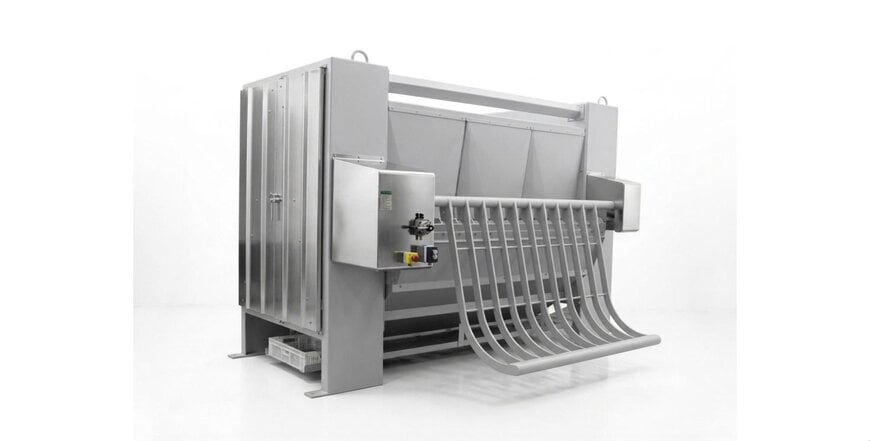
Application areas: Pork and beef slaughtering, food safety and hygiene, animal welfare.
Industry sectors: Meat processing, industrial automation.
Pork and beef processors range from small plants handling about five cattle per hour to large facilities processing 40,000 pigs per day. JBT Marel offers modular slaughter and processing equipment covering this full span, allowing processors to start with the machines needed now and add meat processing automation as volumes, regulations and labour conditions change.
Changing Requirements in Asian Meat Processing
In Asia, governments and consumers increasingly expect safer food and better animal welfare. Vietnam, for example, is modernising fragmented slaughter practices through licensing and centralisation. At the same time, population growth and an expanding middle class are increasing demand for pork and beef, both for domestic markets and for export. Processors moving away from wet-market supply chains therefore need equipment that meets licensing, welfare and food safety requirements without oversizing investment.
Modular Path from Manual to Automated Lines
"Our customers can utilise this massive portfolio that goes from no automation to full automation. One of the greatest advantages is that you can put in one machine that increases capacity, or hygiene, or animal welfare, and then when you're ready add another one," says Nick Adams, Director APAC, JBT Marel.
A typical entry configuration combines a stun box, a scalding and dehairing system and a manual splitting saw. As throughput grows, the manual saw can be replaced by a robotic M-Line splitting saw. Combination lines allow a single robot to be installed at the station where it has the greatest effect on capacity or labour demand.
Animal Welfare, Hygiene and Labour
Stunning boxes for pigs and cattle support calm handling and effective stunning, and lower pre-slaughter stress also improves meat quality. On the hygiene side, biosecurity threats such as African Swine Fever (ASF) and contamination risks require equipment designed for cleanability, such as the rotating table for pig offal evisceration and inspection. To address labour scarcity, the portfolio includes flexible transport systems, rail conveyors, robotic saws requiring minimal operator input and vertical dehiders; the Down Puller A3 can dehide up to 180 cattle per hour.
Uptime is supported by a global service network, spare-parts facilities, local service teams and preventive maintenance. "Our lines are built for low stoppage," says Breno Basso, Global Product Specialist, JBT Marel.
Ciacarne Doubles Pork Processing Capacity
Brazilian pork processor Ciacarne needed to double capacity to 300 head per hour in a new facility, with priorities on animal welfare, hygiene and environmental impact. "We wanted ease of cleaning to avoid contamination. The inspectors who visit are always impressed with the project," says José Maria Campos, General Director, Ciacarne. According to Campos, "JBT Marel has met 100% of our needs."
The same scalable approach applies to other growth scenarios, from a plant expanding from 60 to 400 head per hour to processors introducing automated deboning in response to labour shortages, or greenfield facilities designed for 40,000 animals per day.
Edited by Sucithra Mani, Induportals editor – adapted by AI.
www.jbtmarel.com
