
Domino adds high-contrast white ink to its K300 digital inkjet coding solution
Direct-to-package digital inkjet printer enables variable 2D codes, including GS1 Augmented QR Codes, on coloured caps and diverse packaging substrates.
www.domino-printing.com
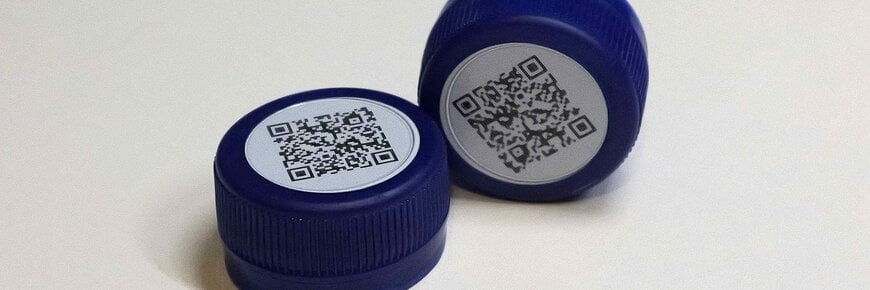
Domino Printing Sciences (Domino) has announced the launch of a high-performance, high-contrast white ink for its K300 digital inkjet printing solution. The addition expands variable data and 2D coding flexibility—including GS1 Augmented QR Codes—across a broad range of products and packaging materials, particularly multicoloured bottle caps and closures.
Developed for complex manufacturing environments, the complete K300 system combines black, white, or dual black-and-white printing options with integrated plasma pre-treatment, UV curing technology, and automated code verification to deliver durable, high-contrast marking across varied substrates.
Meeting rising 2D coding and SKU complexity in high-speed lines
Toby Gugoașă-Hayhurst, Product Manager Digital Monochrome at Domino, stated: "Manufacturing is becoming more complex across all sectors: evolving consumer preferences are driving increased product diversification, and many brands are looking to manage multiple different products within their existing production sites. Our customers are also under strong pressure to print high-resolution variable data 2D codes for product traceability, regulatory compliance, and consumer engagement."
Gugoașă-Hayhurst continued: "With the launch of our new white ink, manufacturers can meet complex, high-resolution coding requirements across a wide range of packaging types, shapes, and substrate colours within a single solution."
As global industries transition toward direct-on-product 2D codes alongside growing stock-keeping unit (SKU) counts, production lines—particularly in the beverage sector—must handle multiple packaging sizes and formats while meeting strict industry grading standards and withstanding hot and cold supply chain environments. Engineered to address these challenges, the K300 prints durable, high-resolution variable 2D codes on bottles, packs, labels, and flexible packaging, reliably operating at speeds of up to 250 m per minute to meet the needs of high-speed production lines, notably in the beverage and FMCG sectors.
Dual-printhead architecture, surface pre-treatment, and R-Series vision verification
To support the shift toward label-free water bottles, the K300 enables direct-to-bottle coding via Domino's Bottle Cap Printing Station. Previously offered with black ink, the addition of white ink allows manufacturers to print high-contrast black-on-white codes across a wide variety of coloured caps and closures.
Available in a single-printhead option or a dual version capable of printing both black and white ink, the K300 lets manufacturers handle a wide range of substrates and packaging types without major line modifications. It can be integrated with plasma pre-treatment and UV LED curing solutions from Domino's technology partners to ensure long-lasting codes. Manufacturers gain full flexibility to print directly on packaging, product or label, with integration into existing digital or flexographic printing solutions. Optional integration with Domino's R-Series vision systems provides consistent code quality and readability checks, helping reduce the risk of coding errors, product recalls, and stock waste.
Russell Wiseman, Global Beverage Sector Manager at Domino, commented: "With the launch of our new white ink, we are pleased to offer one of the most comprehensive 2D code printing solutions on the market, designed to enable manufacturers to adopt 2D coding across a wide range of packaging formats, colours, and substrates. The complete K300 solution once again illustrates Domino's commitment to helping its customers meet growing variable data printing requirements and the evolving expectations of their own customers, while helping to optimise production efficiency."
Additional Context:
This section explains general principles of plasma surface activation, UV-LED ink curing, and ISO/IEC 15415 2D barcode contrast grading in high-speed packaging lines not included in the original press release.
High-density polyethylene (HDPE) and polypropylene (PP) bottle caps possess inherently low surface energy and non-polar molecular structures, causing standard liquid inks to bead rather than wet out evenly. Inline atmospheric plasma pre-treatment bombards the plastic closure surface with ionised gas molecules before printing, introducing polar functional groups that raise surface tension and improve adhesion of UV-curable inks.
Under international barcode quality standards such as ISO/IEC 15415, optical scanners evaluate 2D DataMatrix and QR symbols based on Symbol Contrast—the reflectance difference between dark modules and the light background—as well as quiet zone integrity and modulation. Printing an opaque white base layer, typically pigmented with titanium dioxide, beneath black variable data creates a uniform high-reflectance background on dark or translucent plastics, which helps support reliable machine readability at high conveyor velocities.
Edited by an industrial journalist, Lekshman Ramdas, with AI assistance.
