
www.foodpackautomation.com
05
'26
Written on Modified on
Thermodynamic Integration and Energy Planning in Beverage Production
GEA introduces its Add Better Consulting service to evaluate thermodynamic feasibility and operational costs for heat recovery systems in industrial breweries.
www.gea.com
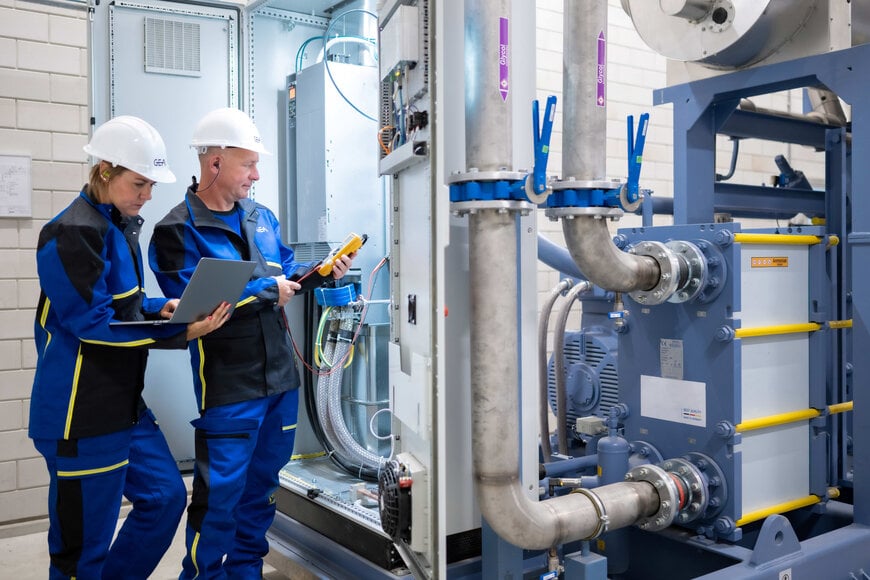
GEA is introducing Add Better Consulting, an industrial energy planning service designed to optimize thermodynamic integration and decarbonize industrial beverage production. The service evaluates process modifications, waste heat recovery, and heat pump viability to align thermal supply with batch load profiles in brewery operations.
Thermal Load Mapping and Process Integration
GEA will present this evaluation methodology at BrauBeviale in Nuremberg, Germany, from November 10–12, 2026 (Hall 9, Booth 9-362). In the brewing and beverage manufacturing sectors, evaluating the transition from steam to hot water or implementing heat pump technology requires analyzing plant-wide production processes alongside utility operations. The consulting service integrates operating data, cooling requirements, and energy flows to map precise temperature needs and match them against available waste heat. This integrated approach ensures that thermal capacity modifications do not compromise throughput or strict hygiene standards.
Thermodynamic Mechanisms in Waste Heat Recovery
Implementing waste heat recovery requires exact alignment between energy supply and process demand. Standard refrigeration systems in brewing environments often discharge waste heat into the environment at approximately 35 °C. By applying thermodynamic analysis, engineers can integrate high-temperature heat pumps to elevate this waste heat to 90 °C. In specific brewery deployments, this temperature amplification currently covers 45 percent of the total facility heat demand, with the technical potential to reach 100 percent under optimal thermal load conditions. The operational viability of these heat pumps is determined by measuring the coefficient of performance against the localized ratio of electrical to gas costs.
Long-Term Infrastructure Lifecycle Planning
The service evaluates the capital expenditure, operating costs, and required interventions in the production line to formulate a prioritized investment roadmap spanning 10 to 15 years. This framework mitigates the risk of stranded assets by ensuring initial equipment retrofits remain compatible with future capacity expansions and facility modifications. Dr. Isabel Osterroth, Senior Director Add Better Consulting & Nexus at GEA, notes that a heat pump on its own is not a universal solution, and comprehensive site evaluations are necessary to determine functional viability based on specific production constraints. The methodology utilized in the Add Better Consulting process has been validated by TÜV Rheinland.
Additional Context
This section details technical specifications and competitive benchmarking not included in the original news release.
In the industrial food and beverage energy consulting sector, GEA’s service operates alongside thermal management frameworks from companies such as Alfa Laval and Danfoss. Alfa Laval addresses thermal optimization through detailed heat exchanger audits and process integration tools, typically benchmarking waste heat recovery potential based on pinch analysis. Danfoss provides systemic energy efficiency evaluations focused on refrigeration compressors and variable frequency drive integration. While these competitors emphasize component-level efficiency and heat transfer rates, GEA’s Add Better Consulting broadens the metric to include continuous process hygiene and batch-specific thermal load mapping for breweries, directly linking the thermodynamic coefficient of performance of proposed heat pumps to multi-year facility expansion timelines.
Edited by Aishwarya Mambet, Induportals Editor, with AI assistance.
www.gea.com
